YRAP Interview with Dr. Marchand
YRAP Interview with Dr. Marchand
Written by: Jeanna Pillainayagam, member of Foundry’s Provincial Youth Advisory Committee
In May 2021, I had the opportunity to interview two researchers who had met with the Youth Research Advisory Panel (YRAP) to gain feedback on their research grant proposals. I wanted to see what the experience of working with the YRAP was like for them, as well as gain some insight into their perspectives on the importance of collaborating with youth in research. Below are some snippets of my conversation with Dr. Kirsten Marchand.
*Please note that I have lightly edited Dr. Marchand’s responses for the sake of clarity.
Jeanna: How did you hear about the YRAP?
Dr. Marchand: At the end of October, I started a postdoctoral research fellowship position at Foundry, [which is] jointly sponsored also by UBC. … Within the first month of getting myself oriented, I got the chance to hear through our regular research team meetings about the YRAP … and just thought, ‘What an incredible idea!” All of my research in the past has been with populations that … some people would define as ‘underserved’ or ‘marginalized’. I use the air quotes, those are not my words. I’ve always been worried as a researcher and curious about how we can find more ways to involve people whose lives we’re studying and trying to support and help. And to try to find ways to better involve them in the research process. I stand behind the idea that obviously that can lead to a better final product, [which would be] a proposal to identify research questions that are more relevant and important to [the] people whose lives we’re trying to improve upon or to support. …
Jeanna: What made you want to approach the YRAP for feedback on your grant proposal?
Dr. Marchand: So there’s a couple of things. First … it aligns with my values as a researcher. And I’m in this stage now where as a postdoc, I am making the transition between being a student and focusing a lot on understanding the methods and the data, and all that stuff that you learn as a PhD student, to now making that jump towards becoming an independent research scientist. And so it really just aligns with my values and this was a great opportunity for me to have the chance to actually do work that is informed by or supported by conversations with young people. The other major reason for me is that all of my work previously has been with adult populations, and so I felt like this would be a … miniscule opportunity to ensure that … the way I was writing or the way I was thinking about these problems wasn’t just coming from the literature, but also that I had an opportunity to talk about it a little bit with a group of young people. Now I don’t think that my work stops there by any means … hopefully if this work gets funded, [it] will be an ongoing process where I’ll get to engage more with young people and have young people working alongside me so I can learn and do really good research. …
Jeanna: What were some of your key learnings from your experience working with the YRAP?
Dr. Marchand: I think one of the key learnings that I really took away was to not underestimate the complexity [and] the sensitivity of the topics that I’ve been working on … [T]here were some comments made [by the YRAP about] intersections with gender identity and gender roles … that of course I had thought a little bit about, but not at all I think to the level of complexity that it should have been given. So that was a really important takeaway. As well … a lot of the comments were around some of the inclusion criteria and the procedures that … I didn’t have a ton of space [to write about], so I only had like a page really to write about that stuff [in the grant proposal]. But [there were] a lot of comments as well around recruitment and just to challenge me, I think, in my thinking around traditional research approaches and how they can be very hierarchical and top-down, and how that can actually potentially hinder my ability to reach people who I obviously really want to be able to reach. So I think it was just challenging me to [think a bit more] outside the traditional structures of the university system and academic research, to be a bit more creative. And then just to be [thinking a bit more] completely through the complexity of the questions I want to ask. Which is all, again, at that stage of [the proposal] development, really crucial. But to me that’s going to require more than one meeting, and hopefully longer-term investment … those would be the two takeaways from the meeting. And then again, I think just in terms of my values, it just solidified why it’s so important I think for me to have those opportunities now and in the future to be able to work closely with the people that I’m trying to do research with and for.

Jeanna: Do you think there’s a growing desire among researchers in your field to have more youth input in their research?
Dr. Marchand: I can’t say youth input specifically because this is [a] newish [area] for me now. But … I can say that at least in my work with people who are using substances and experiencing mental health challenges or needs, that there’s definitely a growing movement to encourage researchers from the very beginning to co-design research with people with lived and living experience. And that to me is just an ethical imperative. We’re studying topics that are incredibly sensitive and complicated and require great care in order for the project to be meaningful, for it to be sensitive, for it to do well, and then also for it to actually land and have some impact. And I think that another area for me is that I’ve been frustrated by the fact that we often do research on these topics, and then we just publish the paper, and move on. And it doesn’t lead to any real success aside from [helping] the researcher’s curriculum vitae grow[ ]. So [researchers] get more publications and [researchers] get more success out of it, but especially during research in healthcare on complex topics like opioid use disorder, it is so important I think to involve those stakeholders from the very beginning so that we can then have more of an impactful study that hopefully leads to some kind of systems-related change. …
Jeanna: What would you say are some of the challenges of incorporating youth feedback into research?
Dr. Marchand: [F]or this application [when] I met with the YRAP, that was for [a specific grant], and for fellowship applications. So they didn’t have a devoted section for knowledge translation, or integrated knowledge translation, or how [the researcher will be] working with young people. They didn’t have a section for that, so then I was stuck to sort of choose what to include and what I could fit. So that root problem comes down to the funder, and if they want us to be doing research that is more engaged research, then they need to create more spaces within our actual applications to speak to how we are doing that, … And give the researchers also more time to do that kind of research, because it takes more time to get together to meet and to account for different perspectives and all of that stuff. And so I would say the root of that challenge comes to the funder, and [on] the flip side, I just recently applied to [another specific grant] with the same application that I met with the YRAP about, but they had more space to actually spell out some of those things. So I was able to then take into account more of the procedures that were suggested from the panel when I met with everybody around different forms of recruitment and engagement, and stuff like that. …
Jeanna: From your viewpoint, what would you say is the significance of a panel like this?
Dr. Marchand: I feel like so many things, to be honest. So I’m not sure if I’m going to be able to pinpoint it to one thing. I think it just makes you a better researcher. That’s like a super silly-sounding, idealistic way of saying it. But I just think it makes you more accountable, it makes sure that you’re asking questions that make sense to the people that you are eventually going to be asking those questions to. It brings us more together in our world views, in our ways of seeing a problem. And I use that word, “problem”, as in, I’m thinking [of] health systems or like big social problems that we’re facing these days. So it makes you just think about it in a way that makes sense to everybody, not just from your office, university, and campus, … So I think it just makes you a better researcher. It means you’re going to ask questions, you’re going to be thinking it through in a different way. More complex problems require very complex ideas and solutions, and so we want to have as many diverse perspectives at the table, in my opinion, to make a project successful, and to hopefully lead to some kind of change. … [B]ut then I also see that there’s probably, or hopefully, some benefits to young people and to families who might be able to be engaged in this as well. So getting the chances to have your voices heard, and from the very beginning, and maybe hopefully learning some new skills along the way. …
Jeanna: Do you see this type of panel being adopted in other fields of research, or even other parts of the world? Do you see this kind of model being replicated?
Dr. Marchand: I think it could be, for sure. It seems to me, from my very naive one-time visit, especially now in this new world where we’re so accustomed to working virtually, why could it not? Maybe the better question is what are the stop gaps? … there needs to be a bit of resources and funding to back it up, and that’s where … it needs to come down to the funders. …
[T]he whole system is set up in a way that it feels like it values this ivory tower research. Like doing research in silos, doing research alone, and it values that researchers get publications. The whole system is set up in this way that it’s around the research scientist, and it’s not around the community that we’re trying to do research to inform solutions [for] better delivery of care to, … [B]ut that can’t happen in silos, and it shouldn’t be about a publication. It should be about policy change or a change in the quality of care.
To me, it really does come down to the root problem being at the funder. So if funders would put in requirements around this and give researchers the room to do this kind of research, [through] time and resources, then I can’t see what the problem would be. I think maybe the questions we need to be asking ourselves more is how can we not? And why are we not doing this? Why is this not a standard practice, [when] doing research on and about especially sensitive topics? So I feel like yeah, it could be replicated for sure.
About Jeanna Pillainayagam

Image description: A person of colour smiling at the camera against a black background.
Jeanna Pillainayagam is currently a member of the Foundry Provincial Youth Advisory Committee, and was a member of the Youth Research Advisory Panel (YRAP). She also has volunteer experience with mental health organizations including CMHA-BC and Jack.org, and has previously worked on mental health projects with groups such as Anxiety Canada, the University of Northern British Columbia, and the BC School Counsellors Association. She is passionate about promoting mental health education and destigmatizing mental illness.
Jeanna believes the YRAP was an excellent opportunity for young people to advocate for the needs of youth in terms of creating accessible, adequate, and appropriate health/wellness services. She hopes to see more programs like the YRAP in the future. To read more articles written by Jeanna Pillainayagam click here.
Foundry Sea to Sky now offering interim services
Launch of first-ever Canadian youth mental health platform will transform research and treatments
A pioneering youth mental health project will enhance Canada’s overall understanding of youth mental health needs and advance new assessment and treatment approaches. Each year, one of out every four youth in Canada needs mental health services, making an initiative such as this urgent and critical for the well-being of our young people. The “Canadian Youth Mental Health Insight (CYMHI) Platform” powered by RBC Future Launch, will use open data, machine learning and other methods to improve communication between youth and families, researchers, clinicians and other service providers with diverse mental health experiences and specializations.
A specialized research team has been awarded a $5.13-million grant to create this platform to optimize mental health with and for youth across Canada. Generous funding has been provided from RBC Future Launch, Power Corporation of Canada, and the Canada Brain Research Fund (CBRF), an innovative arrangement between the Government of Canada, through Health Canada, and Brain Canada.
Led by Dr. Sean Hill, Director of the Krembil Centre of Neuroinformatics, and Senior Scientist at the Centre for Addiction and Mental Health (CAMH), the team brings together diverse organizations across the country including academic institutions, community-based mental health services, hospitals, and youth and family advisories from Foundry, Youth Wellness Hubs Ontario, and other integrated youth services.
The Insight platform will provide an interactive web portal for youth, family members, clinicians, service providers, researchers, and policy makers to access shared data, analytics, and AI tools for optimizing mental health care. The portal will enable users to find data and connect insights from community and school prevention programs, youth mental health services, and clinical research studies. The portal will also provide access to AI-based services to help users navigate mental health services, personalized tools for monitoring mental health, identifying risks, and recommending services, and an interactive atlas of youth mental health service demand and availability to guide service providers and policymakers.
“Through this project, we are providing a state-of-the-art informatics platform that serves as a foundation to improve mental health for, and importantly, with youth across the country,” notes Hill. “It will facilitate high impact research and the development of youth mental health approaches that would otherwise not be possible.”
“The CYMHI is a fantastic development to empower youth and youth-involved initiatives to take ownership in paving the way for future mental health service implementation,” says Suchayte Bali, Youth Engagement Coordinator at Foundry. “At a grassroots level, this can allow for many youth-led not-for-profit organizations to garner an understanding for which supports are needed in their communities, now backed by machine learning data from across Canada.”
“Right now, 9 out of 10 provinces are funding services with research components, British Columbia can’t learn from New Brunswick, and Ontario is missing evidence from Saskatchewan and so on,” says CYMHI leadership team member Steve Mathias, Executive Director at Providence Health Care and leader of Foundry, a British Columbia network of centres that offer young people health and wellness resources, services and supports both in person and virtually. “It is about bringing everyone together to share and exchange what we are living, and learning.”
Mental illness disproportionately affects young people between the ages of 15 and 29 worldwide. It accounts for approximately half of the overall burden of disease in this age group, making it the leading cause of disability in Canada.
“More than ever, brain research is critical in helping us, as a community, recover from the COVID-19 pandemic and mitigate its effects on the brain and our mental health,” says Dr. Viviane Poupon, Brain Canada President, and CEO. “We must invest in projects like these that will lead to concrete impacts on brain health for youth in Canada.”
“The stress, anxiety, depression, and loneliness caused by the COVID-19 pandemic have disproportionally impacted the mental health of young people in Canada. With so many children and youth still struggling, it is essential that we accelerate our efforts to ensure that young people have access to appropriate supports when and where they need them,” says The Honourable Carolyn Bennett, Minister of Mental Health and Addictions and Associate Minister of Health. “This ground-breaking mental health platform will continue to improve youth mental health services by listening to youth in order to base our response on a much better understanding of youth priorities, needs and treatment approaches.”
“It’s important to us that youth across Canada have the best opportunities to thrive and reach their fullest potential,” says Mark Beckles, Vice-President, Social Impact and Innovation, RBC. “Through our partnership with Brain Canada, we’re focused on increasing and accelerating access to services for youth who are facing mental health concerns, while facilitating digital solutions for practitioners and researchers.”
“At Power Corporation we recognize how critical it is to strengthen access to mental health services and supports for young Canadians and their families, wherever they live. We are proud to be able to support the Canadian Youth Mental Health Insight (CYMHI) Platform. This advanced digital platform and pan-Canadian partnership between researchers and practitioners promises to fill gaps in support and ultimately enhance the quality of youth mental health care in every region of the country,” says Paul Genest, Senior Vice President, Power Corporation of Canada.
This project was awarded funding through the 2021 open call for applications to the Brain Canada Youth Mental Health Platform, powered by RBC Future Launch, with generous support from Power Corporation of Canada.
Funding for the Brain Canada Youth Mental Health Platform has been made possible by the Canada Brain Research Fund (CBRF), an innovative arrangement between the Government of Canada (through Health Canada) and Brain Canada Foundation.
To learn more about this exciting project, visit Brain Canada’s website.
In My Shoes: What I Look for When Providing Feedback on Research Grant Proposals
Written by: Jeanna Pillainayagam, member of Foundry’s Provincial Youth Advisory Committee
One of the primary roles of the members of the UBC Youth Research Advisory Panel (YRAP) was to provide feedback to researchers on their draft grant proposals. With such a diverse panel, there were many perspectives and a variety of feedback provided to each researcher. In this blog post, I would like to go over some of the main things I look for and the key questions I consider when providing feedback on a draft grant proposal.
Representation – How will the researchers ensure that there is equal representation across relevant identifying factors such as ethnicity or gender? Are there any barriers in the current grant proposal that would make it harder for certain groups of youth to participate? Is the research topic a stigmatized issue in certain cultural or religious groups, which would limit the diversity of youth volunteering to participate in the study?
Accessibility – Are there accommodations in this study for youth with physical disabilities? For example, if the study requires all participants to meet at a physical location, is the location accessible for someone who uses a wheelchair? Do any videos the participants may have to refer to include captions? Furthermore, if the study requires online participation, it is also important that youth have access to the appropriate technology. Some youth may not have the stable internet connection or physical technology that is needed to be able to participate, making these studies inaccessible.

Image description: A Latinx disabled woman and an Asian disabled genderfluid person chat and sit on a couch,
both holding coffee mugs. An electric lightweight mobility scooter rests on the side.
Photo from: Affect the Verb
Another crucial thing to keep in mind when dealing with diverse populations is that sometimes researchers will have to work with youth who do not speak English as their first language, or who have parents that are not comfortable speaking in English.
Although it may not be possible to have translations for every language spoken, it might be helpful to consider having translators or translated materials for languages that are commonly spoken in the main areas that the studies target, to increase the likelihood of recruiting diverse participants.
Safety – How will the researchers foster a safe environment for youth in their spaces? What are some steps the researchers are taking to make sure the youth they work with feel comfortable and respected? What are some considerations that are being made for BIPOC or LGBTQ+ folks in terms of safety?
It is imperative that youth participants feel safe in research spaces because it allows them to feel more comfortable being open and honest with their thoughts, opinions, and experiences, which can lead to more accurate research outcomes.
Likewise, it is also important to think about how the researchers will safely collect youth data and store it so the participants’ privacy is not compromised. Moreover, when the researchers present their findings, will they anonymize any data or direct quotations from youth?

Image description: A women of colour wearing a white top, standing against a pale green background
and staring into the distance.
Practicality – As a young person myself, do I see any barriers to participating in this research space? Are there certain improvements that I think can be made to make the process smoother and/or more comfortable for youth? Do I see my peers participating in a study like this? What might be some barriers for them?
Nuance – Are there perhaps some details that come from lived experience as a young person accessing the healthcare system, that might have been overlooked when designing the study?
I think it is very important to mention that of course researchers have more experience under their belt in terms of education and working in a clinical setting. However, sometimes when people are so used to setting up systems and projects from their perspective, they may tend to forget or overlook details that are meaningful for their target populations.
This is by no means an exhaustive list.
However, I think it highlights some of the major factors I take into account when I provide feedback on grant proposals to researchers. I recognize my immense privilege, having had the opportunity to take part in a panel like the YRAP, and I am extremely thankful for the experience. I can only hope that soon, collaboration with youth will become a regular step in the process of conducting meaningful and impactful research.
About Jeanna Pillainayagam
Image description: A person of colour smiling at the camera against a black background.
Jeanna Pillainayagam is currently a member of the Foundry Provincial Youth Advisory Committee, and was a member of the Youth Research Advisory Panel (YRAP). She also has volunteer experience with mental health organizations including CMHA-BC and Jack.org, and has previously worked on mental health projects with groups such as Anxiety Canada, the University of Northern British Columbia, and the BC School Counsellors Association. She is passionate about promoting mental health education and destigmatizing mental illness.
Jeanna believes the YRAP was an excellent opportunity for young people to advocate for the needs of youth in terms of creating accessible, adequate, and appropriate health/wellness services. She hopes to see more programs like the YRAP in the future.
Keywords: youth research, mental health, accessibility, equity, diversity, inclusion, accessible research, representation, IBPOC, LGBTQ+, 2SLGBTQIA+, Foundry BC, Foundry, Feedback, Research, Youth, Youth Research, Jeanna Pillainayagam, Representation, Accessibility, Safety, Youth Participants, Practicality, Nuance, Privacy, Research Study
Bell-Graham Boeckh Foundation Partnership announces $1.5 million donation to Foundry
In the lead up to Bell Let’s Talk Day, the Bell-Graham Boeckh Foundation Partnership today announced a $1.5 million donation to St. Paul’s Foundation in support of Foundry to continue to transform youth mental health in BC and share knowledge and best practices around Canada.
This donation will help to bolster Foundry’s Research team and its Knowledge Translation and Exchange (KTE) team over the next three years to improve integrated health and social services for youth and their families and caregivers in BC and support other emerging Integrated Youth Services (IYS) initiatives around the country and beyond.

Youth at Foundry Vancouver-Granville. Photo credit: Jeff Topham
This increased capacity within Foundry’s Research and KTE teams will enable the organization to translate and mobilize research findings as well as data and lessons learned from their 11 (soon to be 19) IYS centres and virtual services to continuously inform and improve services for youth and their families and caregivers.
Funding from the partnership will also give Foundry greater capacity to continue to support emerging IYS networks, sharing lessons learned and mobilizing knowledge that will help improve access to quality, integrated care and ultimately improve outcomes for all Canadian youth.
“We are so grateful for the Bell-Graham Boeckh Foundation Partnership’s lifetime support of Foundry,” says Steve Mathias, Executive Directory at Foundry. “As we enter our seventh year, Foundry is at a pivotal moment in our organizational life cycle, with an extraordinary opportunity to translate and share our findings and learnings to benefit not only our network of centres and virtual services, but emerging IYS models across Canada and internationally.
This donation is integral in moving us closer to our vision of transforming youth health and social services. Together, we are supporting youth and their families and caregivers in living a good life.”
The gift is a part of the Bell-Graham Boeckh Foundation Partnership’s $10M commitment to advance integrated systems of care for youth mental health across Canada through IYS. Cumulatively, Bell and the Graham Boeckh Foundation have contributed more than $3M in philanthropic support to St. Paul’s Foundation, helping to forge the Foundry provincial initiative.
“I am incredibly grateful to the Bell-Graham Boeckh Foundation Partnership for this gift,” says Dan Nixon, Youth Engagement Specialist at Foundry. “It will allow Foundry’s research to continue to be a responsive, flexible and dynamic entity empowering youth voices to move evidence into practice quickly.
“With their support, Foundry’s research and knowledge exchange efforts will not only be cutting edge but will continue to ensure meaningful, accountable and intentional partnerships are built alongside youth, family and communities in BC.”
Foundry BC is grateful for the continued support of our partners, the Bell-Graham Boeck Foundation Partnership and St. Paul’s Foundation for enabling our work in integrated youth services.
To learn more about this exciting announcement, read the full news release here.
Media coverage:
$1.5M to explore best practices for youth mental health – CTV Vancouver interview with Dan Nixon, Engagement Specialist at Foundry
Bell Let’s Talk Day is January 26 – Join the conversation!
On Bell Let’s Talk Day, Bell donates 5 cents to Canadian mental health programs for every applicable text, local or long distance call, tweet or TikTok video using #BellLetsTalk, every Facebook, Instagram, LinkedIn, Pinterest, Snapchat, TikTok, Twitter and YouTube view of the Bell Let’s Talk Day video, and every use of the Bell Let’s Talk Facebook frame or Snapchat lens. All at no cost to participants beyond what they would normally pay their service provider for online or phone access.
About Bell Let’s Talk
The largest-ever corporate commitment to mental health in Canada, Bell Let’s Talk is focused on 4 key action pillars – Anti-stigma, Care and Access, Research and Workplace Leadership -and is part of Bell for Better. Since its launch in 2010, Bell Let’s Talk has partnered with more than 1,300 organizations providing mental health services throughout Canada, including hospitals, universities, local community service providers and other care and research organizations. To learn more, please visit Bell.ca/LetsTalk.
Keywords: Bell Let’s Talk, Foundry BC, St. Paul’s Foundation, Graham Boeckh Foundation, Bell-Graham Boeckh Foundation Partnership, integrated youth services, mental health, research, knowledge translation and exchange, youth mental health
Foundry BC receives 2021 Premier’s Award for Innovation
On December 8th, BC Public Services named Foundry BC as the recipient of the 2021 Premier’s Award for Innovation, which recognizes groups, teams or organizations in the BC Public Service who have developed and transformed new ideas into tangible initiatives, programs or projects.
Now, more than ever, we know that young people are in need of support.
Since the launch of A Pathway to Hope in 2019 by the Ministry of Mental Health and Addictions to ensure better access to mental health and substance use for people in BC, more than 12,000 youth accessed Foundry services in more than 90,000 visits. We are thankful Foundry was nominated for this award by our partners in government, and excited to share this acknowledgement with everyone in our network.
“Foundry is a really great example of innovation in the public service because… it’s a model built for youth by youth,” says Nick Grant, Assistant Deputy Minister.
Foundry BC is incredibly honoured to be part of this annual celebration which highlights the finest examples of innovation and excellence in the BC Public Service. Thank you to all Foundry centres and networks across the province who are instrumental in this achievement, as we continue our mission in reaching younger people early and address smaller problems before they become bigger ones.
To learn more, watch the video below.
Visit foundrybc.ca or Foundry Virtual BC to learn more about our services.
Keywords:
BC Public Service, Foundry BC, Foundry Virtual BC, 2021 Premier’s Award for Innovation, Award, Mental Health, Public Service, Youth, Youth Services, British Columbia, Support, Youth Support, Support Services, Provincial Services, BC, Nick Grant, Dr. Steve Mathias, Peer Support, Counselling, Caregivers, Parents, Innovation, Substance Use, A Pathway to Hope, Ministry of Mental Heath and Addictions, Michael Smith Health Research BC, Providence Health Care, St. Paul’s Foundation
Foundry’s research team receives Convening and Collaborating award from Michael Smith Health Research BC
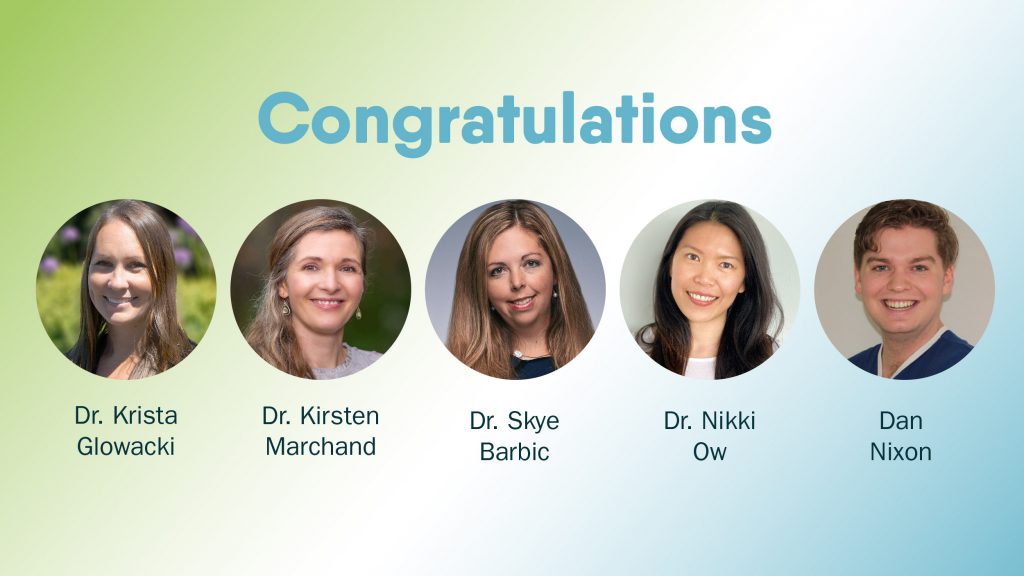
On September 29th, 2021, the Michael Smith Health Research BC (Health Research BC) named Dan Nixon (Youth Peer Engagement Coordinator, Foundry BC), Dr. Kirsten Marchand, Dr. Krista Glowacki, Dr. Nikki Ow, Dr. Skye Barbic (Director of Research, Foundry BC) and their team among the 32 recipients receiving the 2021 Convening and Collaborating (C2) award for their project: Sharing the podium: identifying solutions to meaningfully collaborate with youth in mental health and substance use research. This project will engage key stakeholders in co-creating a set of recommendations to improve youth engagement and collaboration in mental health and substance use (MHSU) research.
Foundry is thrilled to be part of this announcement which comes two weeks following the announcement of Dr. Kirsten Marchand and Dr. Krista Glowacki, as recipients of Health Research BC’s Research Trainee award. This marks the first time that Foundry has been honoured with two Health Research BC awards in the same year.
“Since day 1, Health Research BC has been there to support Foundry. Through various programs, Health Research BC’s support allows us to build a network of academic, clinical, and youth leaders who are driving service innovation in BC for young people and families,” says Dr. Skye Barbic, Director of Research, Foundry and 3x Health Research BC awardee.
The Health Research BC’s C2 program promotes knowledge exchange and meaningful collaboration by supporting researchers, trainees and research users (those with lived experience) in co-developing research that can have a direct impact on patients and the public.
Learn more about their project below:
Mental health and substance use (MHSU) are key health concerns for youth in British Columbia. Involving youth in research for these topics improves the development of MHSU interventions and solutions. However, youth may not want to engage in MHSU research due to concerns around confidentiality, stigma, and other barriers. Researchers may also perceive barriers in finding and working with youth researchers.
The main goal of this project is to identify barriers for youth engagement in MHSU research and recommend solutions for these issues. Two key activities – a small-group discussion (utilizing nominal group technique) and a World Café in-person (March-May 2022, pending COVID-19 restrictions) – will be used to bring youth and researchers together to identify the perceived barriers for each group and how these barriers can be overcome.
From these findings, Foundry’s research team will synthesize results and outline a list of recommendations for youth engagement in MHSU research, and pursue additional funding for a pilot study using these recommendations. The pilot study will measure changes in youth research engagement and research outcomes due to the recommendations.
Foundry’s second award recognition in 2021
Youth engagement, research collaborations and co-design is central to our work at Foundry. We are deeply grateful to Health Research BC for their continuous support in enabling our researchers to lead this innovative work.
Congratulations to Dan Nixon, Dr. Kirsten Marchand, Dr. Krista Glowacki, Dr. Nikki Ow, Dr. Skye Barbic and their team on this award!
Special thanks to our partner and host institutions for making this possible: BC Centre for Disease Control (BCCDC), Centre for Health Evaluation & Outcome Sciences (CHÉOS), Center for Gender and Sexual Health Equity (CGSHE), Foundry BC, Human Early Learning Partnership – UBC Research Network (HELP), Simon Fraser University (SFU)’s Faculty of Health Sciences, University of British Columbia (UBC)’s Doctorate of Medicine and of Philosophy (MD-PhD) program, UBC Department of Occupational Science and Occupational Therapy, UBC Faculty of Medicine, UBC School of Population and Public Health, and the UBC Mental Health Youth and Family Research Advisory Panels (YRAP/FRAP).
About the project team
Project Lead: Dr. Skye Barbic, Director of Research, Foundry and 3x Health Research BC awardee
Research co-investigators:
- Dr. Anne Gadermann, Assistant Professor, School of Population and Public Health, UBC
- Dr. Sarah Munro, Assistant Professor, Department of Obstetrics & Gynaecology, UBC
- Dr. Travis Salway, Assistant Professor, Faculty of Health Sciences, SFU
- Dr. Hasina Samji, Assistant Professor, Faculty of Health Sciences, SFU
Research users:
- Dr. Amanda Butler, Research Manager, Foundry
- Dan Nixon, Youth Peer Engagement Coordinator, Foundry
- Dr. Renee Cormier, Knowledge Translation and Exchange Lead, Foundry
- Dr. Steve Mathias, Executive Director, Foundry
Research trainees:
- Chloe Gao
- Dr. Krista Glowacki
- Dr. Kirsten Marchand
- Dr. Nikki Ow
About Michael Smith Health Research BC and Foundry’s partnership
Since our inception in 2015, Health Research BC was one of several organizations who provided critical funding to Foundry. This year, in celebration and honour of Health Research BC’s 20th anniversary, Foundry extends our deep gratitude and appreciation for our continued partnership with the Foundation.
Learn more about Health Research BC’s Convening & Collaborating (C2) program.
Keywords: health research BC, michael smith health research bc, health research, foundry, foundry BC, youth, youth research, British Columbia, mental health, substance use, health services, youth services, health care, research, researchers, the 2021 Convening and Collaborating award, C2 program, youth engagement, group discussion, announcement, Kirsten Marchand, Krista Glowacki, Skye Barbic, Nikki Ow, Dan Nixon
Learnings from the first year of Foundry Virtual BC
Since the COVID-19 pandemic began, many children and youth in BC are experiencing increased anxiety, stress and other mental health challenges. Foundry has worked quickly to implement innovative virtual solutions for youth and families/caregivers living in BC (learn more in this overview of Foundry’s COVID-19 response to date).
Last spring, we launched virtual services using interim technology, and in early April 2020, Foundry Virtual BC began offering services to young people and families/caregivers across the province through the Foundry BC app, which was co-created with and for youth.
The app offers a user-friendly, accessible way to schedule virtual counselling and peer support appointments in advance, as well as access same-day support via messaging, audio or video sessions, peer group sessions, and web-based tools and resources. No referrals or assessments required.
Here are some of our learnings one year later (taken from Frayme’s report):
- Foundry’s provincial virtual service filled a gap for youth and their families/caregivers who otherwise may not have accessed services.
- The soft launch of the Foundry BC app has already changed the way youth and families/caregivers access services virtually in BC.
- Breaking down barriers to access and advancements in technology have led to increased youth engagement with Foundry Virtual BC.
- With the rapid launch of Foundry Virtual BC, youth in BC have been able to access multiple services to address their needs and improve their outcomes.
- Foundry’s provincial virtual service is reaching high risk and high-needs youth across BC.
- BC youth and families/caregivers are having positive experiences with Foundry Virtual BC technology, services and staff.
- Foundry’s provincial virtual service team has gained valuable insight for quality improvement opportunities and innovations in virtual care.
Since launching virtual services, Foundry has received positive feedback from youth.
“My peer supporter really knows me by now and is able to make really personalized suggestions.”
“I was diagnosed with a disorder that now allows me to begin receiving treatment.”
“It allowed me to talk about how I was feeling, ask for coping mechanisms, and say personal things.”
Foundry Virtual BC offers virtual counselling sessions by voice, video and chat (including booked appointments and walk-ins); peer support (including one-on-one services and peer lead groups); and groups and workshops for young people and their families/caregivers.
The Foundry BC app is available through the Apple Store, Google Play store or on desktop through a web portal.
To learn more and access services, visit foundrybc.ca/virtual.
Keywords: mental health, anxiety, stress, peer support, counselling
Beauty of Life in Psychosis (BLIP): Challenging the definition of “normal”
In *our previous article, Discovering the Beauty of Life in Psychosis, we introduced the first ever BLIP cohort and shared some of the amazing art created by our peers in the group. We’re excited to share some of the insights and artwork from the second cohort of BLIP, which ran over the course of this summer.
First, a quick recap: what is Beauty of Life in Psychosis (BLIP), anyway?
Beauty of Life in Psychosis (BLIP) is an art and creativity group for young people who self-identify as experiencing psychosis, hearing voices, seeing visions and/or having unique beliefs (VVUB). BLIP is a peer-led group, which means that the facilitators (that’s us – Rory and Anne!) have had similar experiences.
The group was born out of a simple idea: that we deserve safe(r) spaces to socialize, be part of a community, talk about our experiences and express ourselves creatively, all without fear of judgment.
Now, in partnership with Vancouver Coastal Health’s Consumer Initiative Fund, Foundry Virtual BC and Early Psychosis Intervention BC, as well as support from The Paint Spot, we’ve been able to host two successful cohorts – including providing all group members with free art supplies.
The goal of BLIP
The goals of BLIP are to build a sense of belonging, normalize talking about VVUB/psychosis and make space to explore and express the personal meaning of our experiences.
In developing BLIP, it was important for us to recognize that while VVUB/psychosis can be confusing, frightening and difficult, it can also be a “normal” part of life with all the complexity of any other parts of life. VVUB/psychosis can also be funny, annoying, boring, interesting, inconvenient, exciting, frustrating, pleasant, ugly and/or beautiful.
We want to treat VVUB/psychosis as an experience that is part of the unique and valuable perspective we are able to share with the world.
Challenging the definition of “normal”
It only makes sense, that the theme the group chose to focus on was “normalcy”. The group questioned the idea of a single definition of “normal,” pointing out that what’s normal for one person might not be for another person, with an emphasis on the importance of knowing our own minds, bodies and needs best. We discussed who gets to decide what counts as “normal,” and how the pressure to be “normal” can be stigmatizing, isolating or feel like having to wear a mask.
On the other hand, we also talked about how “normal” can be a reassuring reminder of what’s common and expected, helping to ground us in reality. We talked about wanting to be seen as “normal” instead of being treated differently and, on the other hand, the desire to reject being “normal” and reclaim being different, embracing the value of our diverse experiences.
Sharing experiences through art
As a group, we found that some of these experiences are easier to communicate through art rather than words, particularly ones “normal” to us but unfamiliar to others. We also found that even though we all had different definitions of “normal” and different relationships to the concept, one way to feel normal was through being in community with each other: by finding commonality in difference.
We invite you to reflect on how the theme of normalcy comes through in the following works by BLIP artists. We are thrilled to share the artwork created with the first cohort of the BLIP youth group.
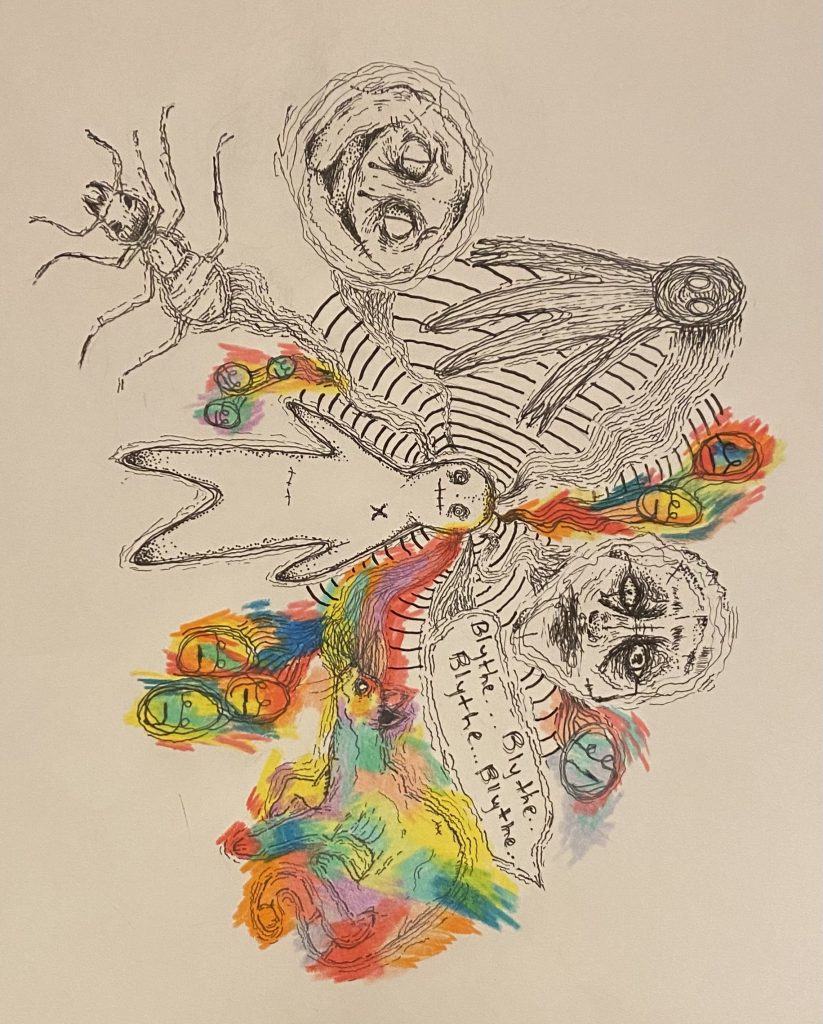
Permanent Fever Dream, 2021 Blythe
About the artist: Blythe is a 20 year old individual diagnosed with schizoaffective disorder. She enjoys creating art that depicts her hallucinations and experiences with psychosis, as well as animal portraits. Her favourite mediums to work with are ink, coloured pencil and oil paint.
Artist statement: This drawing in ink and coloured pencil depicts common themes found in my hallucinations. I wanted to capture how, for me, these experiences often labelled “abnormal” can be frightening but also very captivating & interesting. I used bright colours to show which of these visions I perceive as friendly and intriguing.
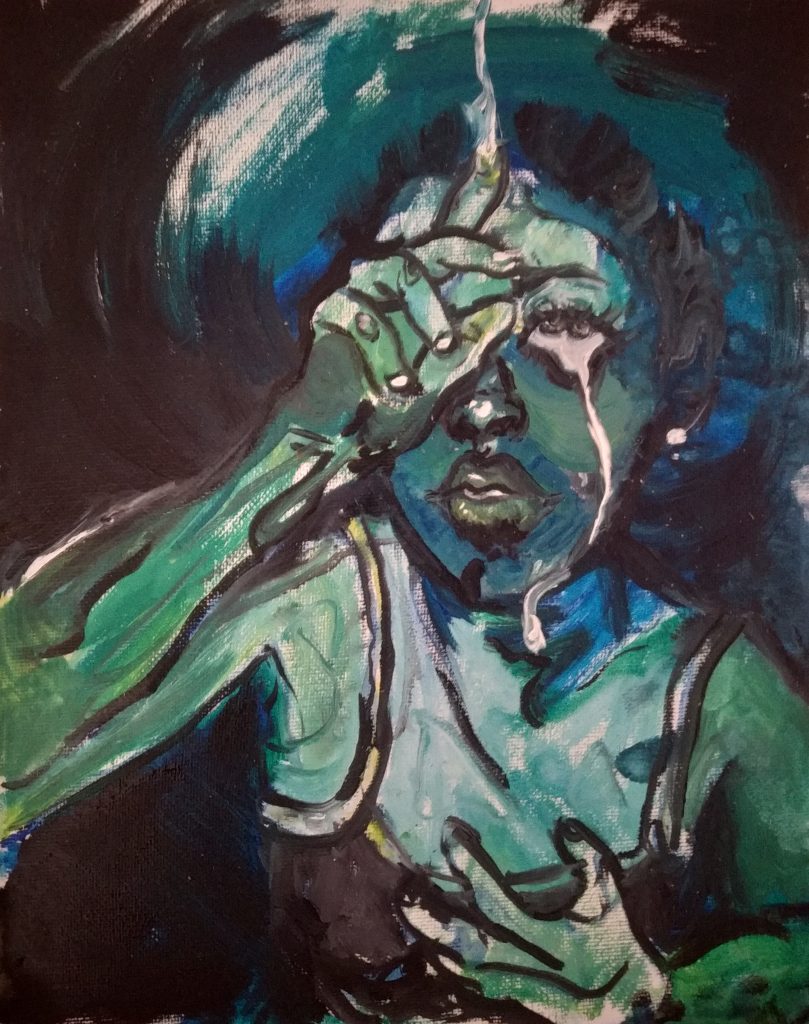
Self Portrait, 2021 Heart
About the artist: Heart experiences psychosis and uses her art to express her unique beliefs surrounding divinity and fate.
To learn more about future offerings of Beauty of Life in Psychosis (BLIP), or to learn more about groups offered by Foundry’s provincial virtual services, please visit foundrybc.ca/virtual/youth-groups.
To learn more about psychosis read the Questioning Reality section of our website or take the Questioning Reality Self-Check. If you would like to reach out to Foundry for support, reach out to Foundry’s provincial virtual services or visit a Foundry centre near you.
*Note about the authors:
Anne (she/they) is a cat parent and casual peer support worker at Foundry Virtual BC with lived/living experience with voices, visions and unique beliefs, and psychosis. They are also a group facilitator for the BC Hearing Voices Network, Kaleidoscope and a researcher in early psychosis. They enjoy incorporating art and writing into their life as well as keeping active and being outdoors.
Rory (they/them) is a non-binary artist, peer support worker and researcher with lived/living experience of psychosis. They are also a facilitator and administrator for the BC Hearing Voices Network, and their writing on the Hearing Voices Movement recently appeared in Health and Human Rights Journal.
Foundry featured in the Mental Health Commission of Canada report
Recently, the Mental Health Commission of Canada issued a report featuring eight unique case studies designed to support health-care and wellness organizations in implementing a recovery-oriented practice.
Foundry was honoured to be one of several organizations highlighted in this report, and to share our approach to this practice which centres the voices and perspectives of youth and their families.
As Foundry’s Head Scientist Dr Skye Barbic said: “Foundry is about co-designing new possibilities in youth services. It’s no longer about bringing youth to the table but building the table that will allow them to fully participate and lead the way.”
Congratulations to our peers at AQRP, CHANNAL, CMHA Calgary, Ontario Shores, Peer Connections Manitoba, Phoenix Residential Society and Reach Out Centre for Kids for their outstanding work in this area as well.
To read the report, click here.