Discovering Beauty of Life In Psychosis (BLIP)
About the authors
Rory (they/them) is a non-binary artist, peer support worker, and researcher with lived/living experience of psychosis. They are also a facilitator and administrator for the BC Hearing Voices Network, and their writing on the Hearing Voices Movement recently appeared in Health and Human Rights Journal.
Beauty of Life in Psychosis
Rory and Anne, have had the pleasure of developing the Beauty of Life in Psychosis (BLIP) group, nurturing it through its infancy, and facilitating the first ever cohort over the last 3 months. It has been an amazing experience getting to know our peers in the group, whom have all brought with them a plethora of skills, experiences, stories, talents and creative ideas.
Breakthrough symptoms or relapse of psychosis are sometimes referred to as “blips.” But what is a blip, anyway? Colloquially, a blip is a minor, short-term change, like a small dip or spike on a graph. “BLIPS,” on the other hand, is a medical term that stands for “Brief Limited Intermittent Psychotic Symptoms.” Foundry’s provincial virtual services offers a youth group called BLIP using our own definition: Beauty of Life in Psychosis.
Sometimes, psychosis is talked about in stigmatizing ways that make people feel like they are broken, abnormal, or “crazy.” Foundry Virtual BC hopes to reclaim the word “blip” to mean something that- while can be frightening or upsetting– can also be a common, experience. Psychosis is complicated, and we believe it’s important to be able to speak openly about what it means for each of us individually – the good, the bad, and the beautiful! Through art and creativity, we hope to build a sense of connection and community, explore the personal meaning of our experiences, and celebrate ourselves as whole people with a unique, beautiful perspective to contribute to the world.
The BLIP youth group was born out of the idea that people who experience psychosis, hear voices, see visions, and/or have unique beliefs need a safe(r) space to socialize, get creative, and express ourselves. Our goal is to encourage participants to find beauty, hope, and community within or around these experiences. With support from Foundry Virtual BC and Vancouver Coastal Health’s Consumer Initiative Fund, that idea became a reality. Using these funds, we were able to collaborate with Paint Spot and provide free art supplies for everyone in the group.
We started each session with a short, guided exercise surrounding a specific theme. Over the course of 6 sessions, we explored self-expression, colour, movement, texture, light & dark, and lastly, space. During the final few sessions, we discussed our ideas for the final project as a group, and the theme we settled on was “transformation.” We spoke about journaling our experiences and growing through that process; imagining and pursuing futures for ourselves that we were told not to expect, the transformation of our self-perception throughout our journeys; and how media portrayals can “transform” our experiences and identities in stigmatizing ways. In that sense, we talked about both negative and positive transformations. Sub-themes of renewal, growth, uncertainty, healing, and the shattering (and rebuilding) of identity emerged.
We are thrilled to share the artwork created with the first cohort of the BLIP youth group. Click on images to expand!
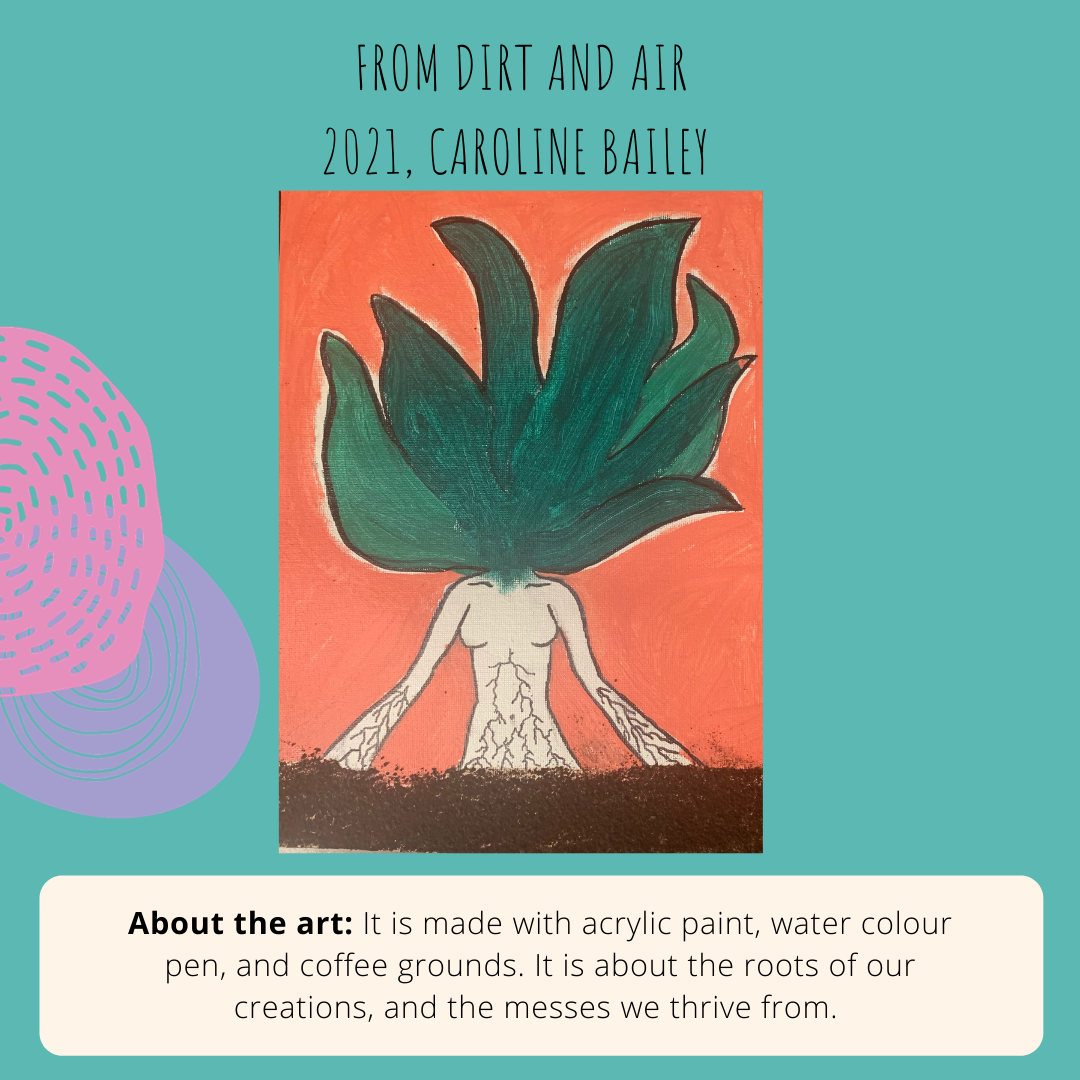
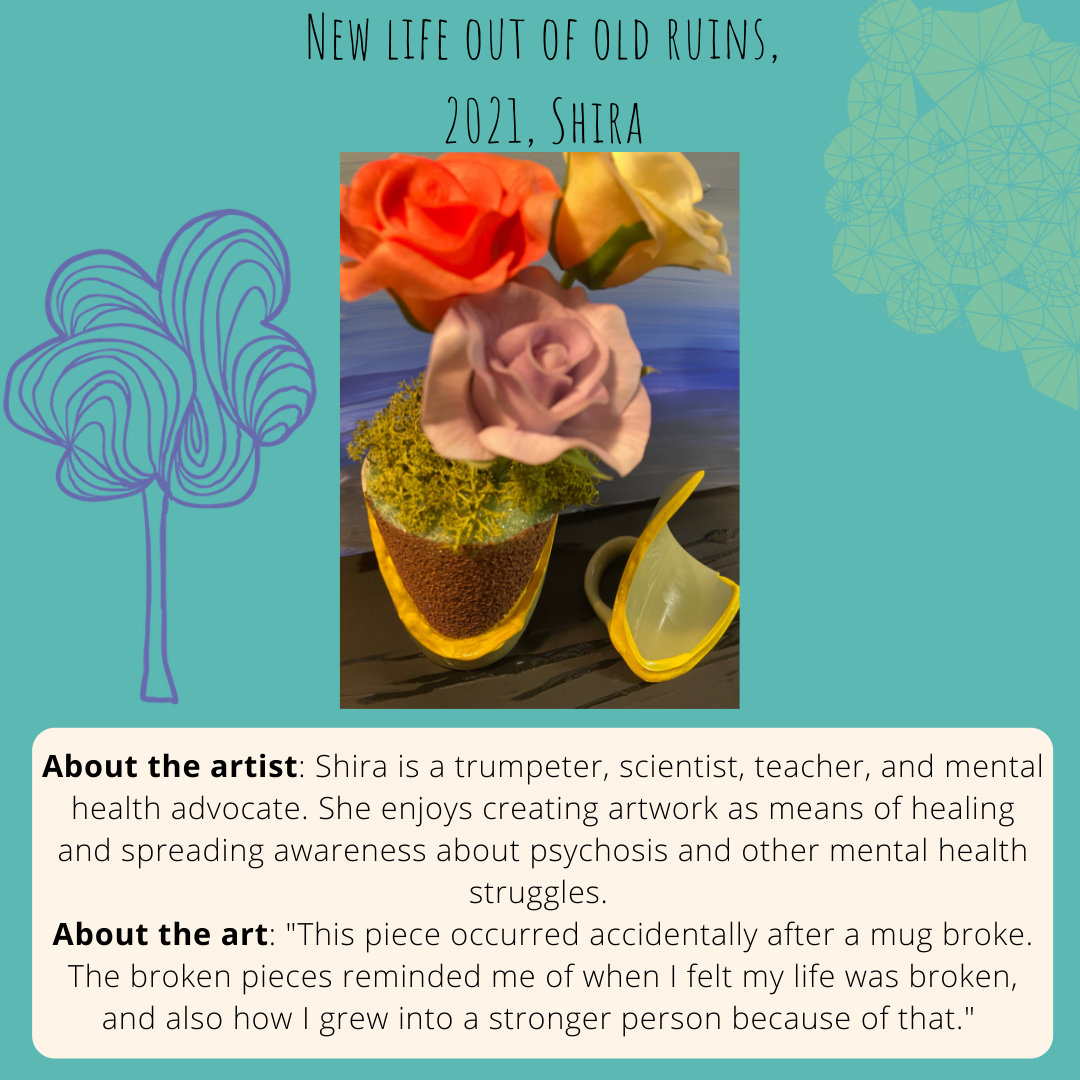
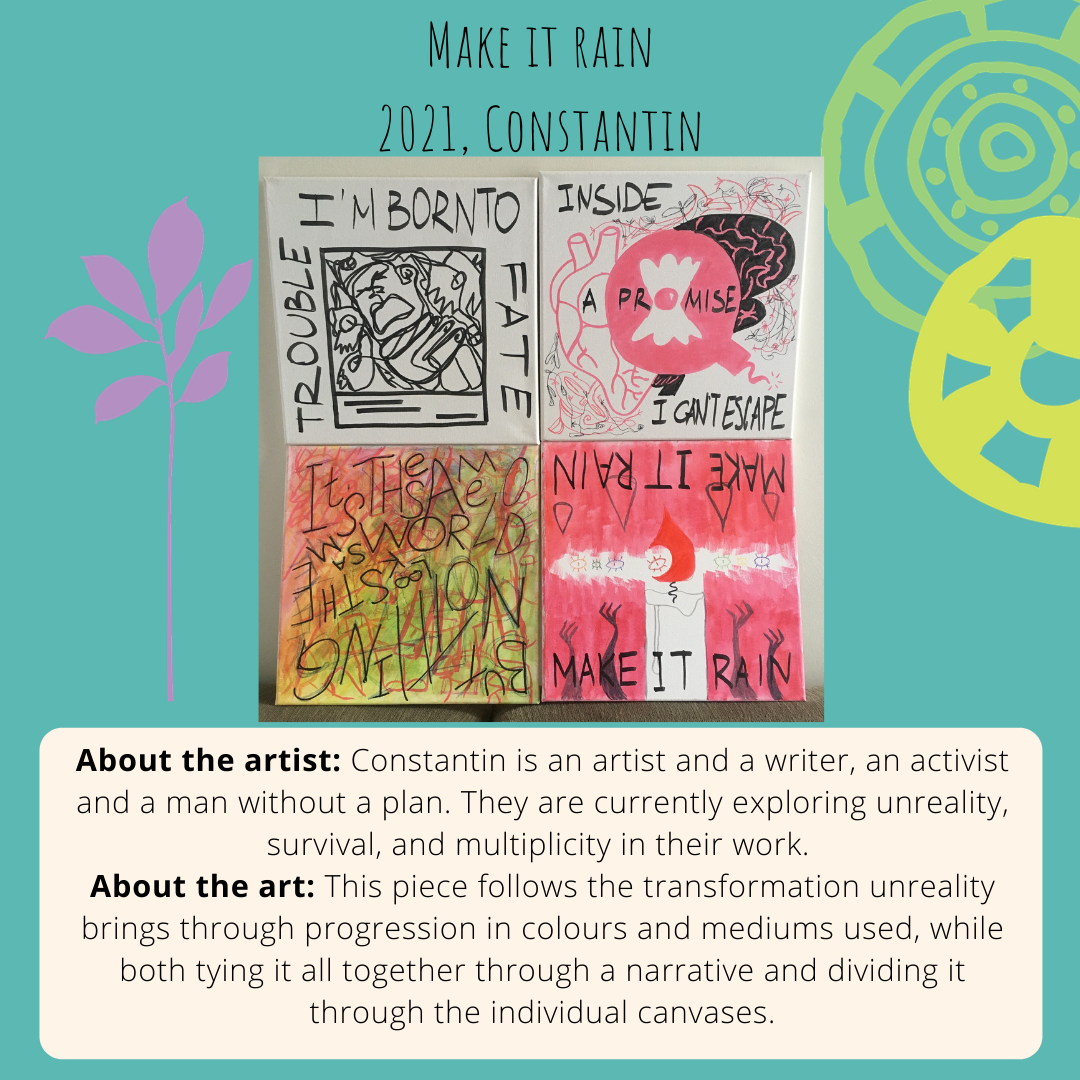
To learn more about future offerings of BLIP, or to learn more about groups offered by Foundry’s provincial virtual services, please visit foundrybc.ca/virtual/youth-groups.
To learn more about psychosis read the Questioning Reality section of our website or take the Questioning Reality Self-Check. If you would like to reach out to Foundry for support, reach out to Foundry’s provincial virtual services or visit a Foundry centre near you.
Preventing Youth Suicide by Promoting Life in Online Places – project led by CMHA BC
The Foundry team is proud to have participated in this project for the Canadian Mental Health Association BC. It aims to better understand how youth suicide prevention and life promotion can be meaningfully taken up online.
This project reports on activities to date for an information-gathering and youth consultation process for professionals engaging with young people looking to PREVENT YOUTH SUICIDE BY PROMOTING LIFE IN ONLINE PLACES. Funding comes from the BC Division of the Canadian Mental Health Association (CMHA-BC) via the Provincial Health Services Authority (PHSA). The ultimate purpose of the project is to inform recommendations for a forthcoming online initiative/digital campaign related to life promotion and youth suicide prevention by CMHA-BC.
It became very clear that a central feature of the work of life promotion is the relational process of cultivating hospitable places together – online and offline.
Here are the main recommendations from the project:
1) Simplify the Online Journey
Funding and organization of resources is a major barrier to more effective online help for youth. Greater collaboration between services agencies is required.
2) Policy and Regulation
Canada/BC need to establish a robust watchdog function related to online safety and youth mental health.
3) Cultivate Caring + Hospitable Spaces online
Youth are seeking more livable online spaces. They are committed to co-creating more friendly and safe user guidelines with large technology, gaming and information sites that they use frequently.
The 26-page report is available here. An executive summary is also available here.
Foundry featured in national ‘Innovation in Primary Care’ series
The College of Family Physicians of Canada (CFPC), in collaboration with the Canadian Psychiatric Association and the Canadian Psychological Association, released a new resource in the Innovation in Primary Care (IPC) series, Integrating Mental Health Services in Primary Care. The series aims to foster collaboration, sharing, and learning among physicians and health care providers in different provinces and territories.
The most recent issue highlights how best to influence patient, provider and system outcomes, with examples of community-based practices that are successfully addressing common challenges and barriers to integrating mental health services. The document presents case examples from Nova Scotia, British Columbia, Ontario, Quebec, and Manitoba – with Foundry featured as an example from BC!
Some key lessons learned in the case examples shared include:
- Providing mental health services (ex. psychological and psychiatric services), in a familiar clinical environment improves the patient experience and reduces barriers to timely care
- Collaboration among organizations can support the implementation of innovative solutions that improve service delivery and are easy for patients to access and navigate
- Engagement of patients and their families is important to encourage and empower patients to take an active role in managing long-standing or recurring mental health issues
- Team-based care—particularly in remote communities serving Indigenous populations—must be led by and respond to the needs of the communities they serve as well as their historical, cultural, socioeconomic and political contexts
Click the image below to read the full report. Also available in French.
Ask the expert: How Foundry BC adapted its model of care to serve children and youth during the COVID-19 outbreak
New Foundry centres improve access to vital services for youth
Standing Together Against Racism and Injustice
We at Foundry Central are deeply disturbed by the recent instances of racialized violence, the killing of George Floyd, and by the ongoing impacts of racial injustice on Indigenous peoples, the Black community, and persons of colour in British Columbia, Canada, the US and around the world.
Racism is deep-rooted in our society and our institutions and is influenced by biases, privileges and a long tragic history of violence and oppression. We recognize that many people in BC face systemic discrimination, unconscious bias, power imbalances and the impacts of colonialism. This results in inequities in access to health care, housing, employment and day-to-day safety.
We acknowledge this. And, we stand with those of you expressing pain, anger and demand for change.
At Foundry, we are committed to listening to and learning from young people, families, and those who are impacted by racial injustice; reflecting on and changing our own practices and behaviours; and supporting systemic reform.
We acknowledge that these events and issues are difficult to process and can bring up overwhelming thoughts and feelings. If you are struggling and need support, foundrybc.ca and our virtual team are here to help you.