Celebrating Beauty of Life In Psychosis (BLIP): A Retrospective
In the last two articles Anne Liao and I wrote about Foundry’s Beauty of Life In Psychosis (BLIP) group, Discovering the Beauty of Life In Psychosis and Beauty of Life In Psychosis (BLIP): Challenging the Definition of “Normal”, we reflected on our experiences co-facilitating the first two cohorts and shared some of the amazing artwork and insights from the group. Now, as this year-long project draws to an end, we’d like to wrap things up with a celebration of our third and final cohort.
First, a little bit of background information about BLIP: Beauty of Life in Psychosis (BLIP) was an art and creativity group for young people who self-identify as experiencing psychosis, hearing voices, seeing visions, and/or having unique beliefs. BLIP was fully peer-led, which means that it was dreamed up, developed, and facilitated by people with these experiences – Anne and myself. Our concept for the group was simple: we wanted to create a safe(r) space to socialize, be part of a community, talk about our experiences, and express ourselves creatively, all without fear of judgment. We were able to host three six-session cohorts of the group, including supplying all participants with free art supplies, in partnership with Vancouver Coastal Health’s Consumer Initiative Fund, Foundry Virtual BC, and Early Psychosis Intervention BC (EPI).
With BLIP, we hoped to challenge some of the stigmatizing ideas that exist around psychosis and unusual perceptions like hearing voices. We wanted to normalize speaking openly about our experiences in all their complexity, as a “regular” part of life and the spectrum of human experience – something that can be funny, scary, weird, interesting, or sometimes beautiful. We aimed to create a space where people felt able to explore their/our experiences in art and discussion, because often, there aren’t many opportunities to share these important conversations with other people. We wanted to recognize the value of the unique perspectives that everyone brought to the group, while also thinking about how the group could be a collaborative space to learn from each other and bounce ideas back and forth. With that in mind, for each cohort, we also worked together as a to come up with a final, themed group project.
For the first two cohorts, our themes were “transformation” and “normalcy.” For the third cohort, the theme we settled on was “societal expectations.” The theme was deliberately open-ended, because we felt that it encompassed many sub-themes that we were interested in as a group. Some of the sub-themes we discussed were experiences of stigma and the expectation to conform; the expectation to “fit into categories”; expectations, assumptions, and judgments around “functioning” and “functioning levels”; and the challenge of finding your own authentic identity. Overall, the group painted a picture of the complexity of navigating societal expectations and identity as young people living with psychosis, voices, visions, and unique beliefs. Many of the sub-themes we discussed in this cohort weren’t specific to psychosis or mental health – instead, some were more about growing up and finding ourselves as people. After all, these experiences are only one aspect of our lives, woven into other, larger stories.
Stay tuned in the new year for artwork from this cohort, which we’ll be sharing on Foundry BC social channel and ware looking to organize a combined exhibition of work by artists from all cohorts. Thank you to all the amazing artists who participated and to our partners at Foundry VIrtual BC, Vancouver Coastal Health and Early Psychosis Intervention BC (EPI) for helping make this group possible!
Note about the author:
Rory (they/them) is an artist, peer support worker and researcher with lived/living experience of psychosis. They are the coordinator for the BC Hearing Voices Network and currently study psychosis in cultural context at the UBC School of Social Work. They draw heavily on their experience of psychosis in their practice as an acrylic painter.
Beauty of Life in Psychosis (BLIP): Challenging the definition of “normal”
In *our previous article, Discovering the Beauty of Life in Psychosis, we introduced the first ever BLIP cohort and shared some of the amazing art created by our peers in the group. We’re excited to share some of the insights and artwork from the second cohort of BLIP, which ran over the course of this summer.
First, a quick recap: what is Beauty of Life in Psychosis (BLIP), anyway?
Beauty of Life in Psychosis (BLIP) is an art and creativity group for young people who self-identify as experiencing psychosis, hearing voices, seeing visions and/or having unique beliefs (VVUB). BLIP is a peer-led group, which means that the facilitators (that’s us – Rory and Anne!) have had similar experiences.
The group was born out of a simple idea: that we deserve safe(r) spaces to socialize, be part of a community, talk about our experiences and express ourselves creatively, all without fear of judgment.
Now, in partnership with Vancouver Coastal Health’s Consumer Initiative Fund, Foundry Virtual BC and Early Psychosis Intervention BC, as well as support from The Paint Spot, we’ve been able to host two successful cohorts – including providing all group members with free art supplies.
The goal of BLIP
The goals of BLIP are to build a sense of belonging, normalize talking about VVUB/psychosis and make space to explore and express the personal meaning of our experiences.
In developing BLIP, it was important for us to recognize that while VVUB/psychosis can be confusing, frightening and difficult, it can also be a “normal” part of life with all the complexity of any other parts of life. VVUB/psychosis can also be funny, annoying, boring, interesting, inconvenient, exciting, frustrating, pleasant, ugly and/or beautiful.
We want to treat VVUB/psychosis as an experience that is part of the unique and valuable perspective we are able to share with the world.
Challenging the definition of “normal”
It only makes sense, that the theme the group chose to focus on was “normalcy”. The group questioned the idea of a single definition of “normal,” pointing out that what’s normal for one person might not be for another person, with an emphasis on the importance of knowing our own minds, bodies and needs best. We discussed who gets to decide what counts as “normal,” and how the pressure to be “normal” can be stigmatizing, isolating or feel like having to wear a mask.
On the other hand, we also talked about how “normal” can be a reassuring reminder of what’s common and expected, helping to ground us in reality. We talked about wanting to be seen as “normal” instead of being treated differently and, on the other hand, the desire to reject being “normal” and reclaim being different, embracing the value of our diverse experiences.
Sharing experiences through art
As a group, we found that some of these experiences are easier to communicate through art rather than words, particularly ones “normal” to us but unfamiliar to others. We also found that even though we all had different definitions of “normal” and different relationships to the concept, one way to feel normal was through being in community with each other: by finding commonality in difference.
We invite you to reflect on how the theme of normalcy comes through in the following works by BLIP artists. We are thrilled to share the artwork created with the first cohort of the BLIP youth group.
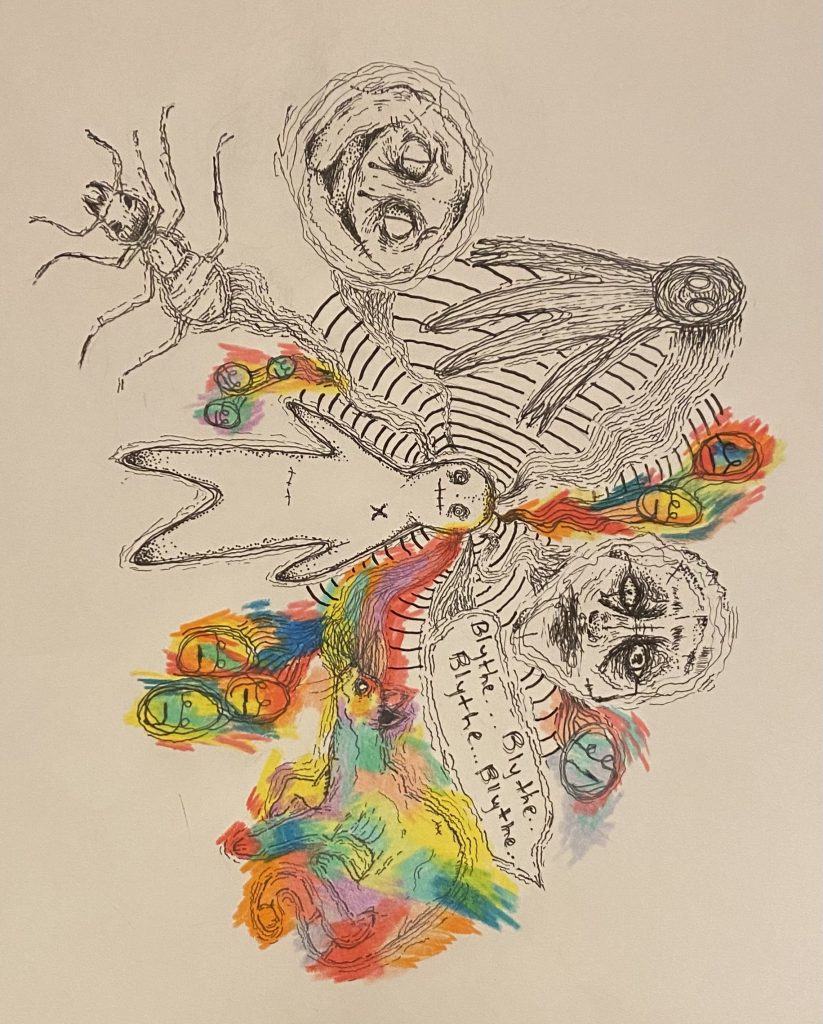
Permanent Fever Dream, 2021 Blythe
About the artist: Blythe is a 20 year old individual diagnosed with schizoaffective disorder. She enjoys creating art that depicts her hallucinations and experiences with psychosis, as well as animal portraits. Her favourite mediums to work with are ink, coloured pencil and oil paint.
Artist statement: This drawing in ink and coloured pencil depicts common themes found in my hallucinations. I wanted to capture how, for me, these experiences often labelled “abnormal” can be frightening but also very captivating & interesting. I used bright colours to show which of these visions I perceive as friendly and intriguing.
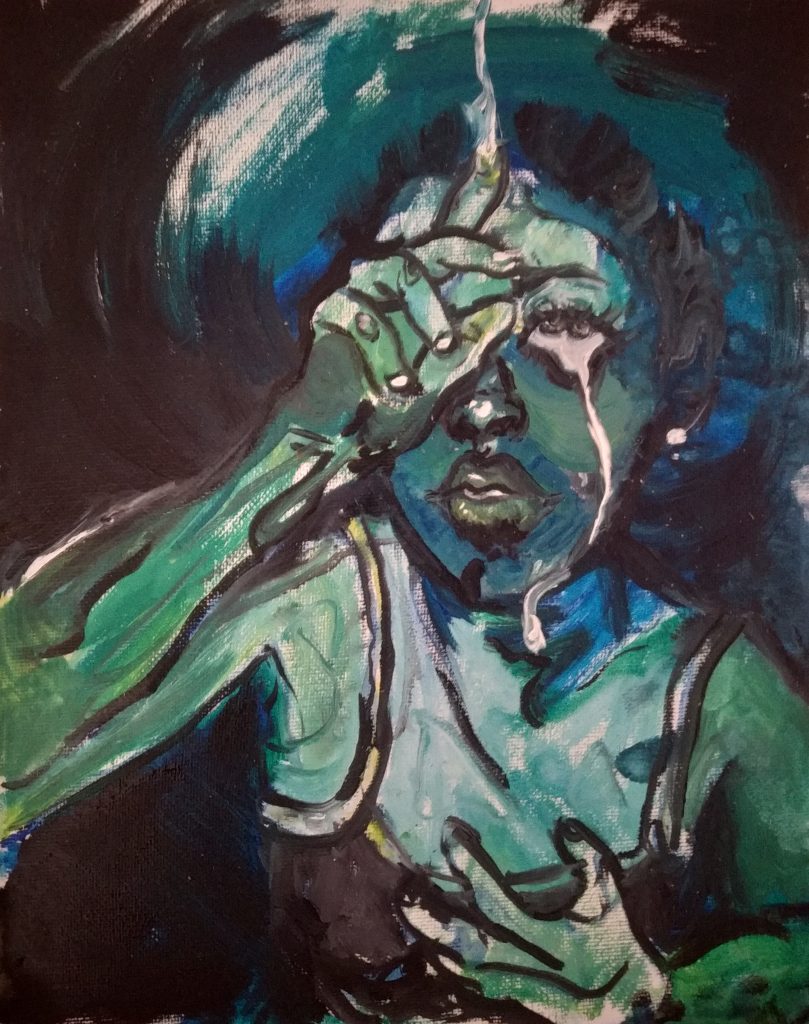
Self Portrait, 2021 Heart
About the artist: Heart experiences psychosis and uses her art to express her unique beliefs surrounding divinity and fate.
To learn more about future offerings of Beauty of Life in Psychosis (BLIP), or to learn more about groups offered by Foundry’s provincial virtual services, please visit foundrybc.ca/virtual/youth-groups.
To learn more about psychosis read the Questioning Reality section of our website or take the Questioning Reality Self-Check. If you would like to reach out to Foundry for support, reach out to Foundry’s provincial virtual services or visit a Foundry centre near you.
*Note about the authors:
Anne (she/they) is a cat parent and casual peer support worker at Foundry Virtual BC with lived/living experience with voices, visions and unique beliefs, and psychosis. They are also a group facilitator for the BC Hearing Voices Network, Kaleidoscope and a researcher in early psychosis. They enjoy incorporating art and writing into their life as well as keeping active and being outdoors.
Rory (they/them) is a non-binary artist, peer support worker and researcher with lived/living experience of psychosis. They are also a facilitator and administrator for the BC Hearing Voices Network, and their writing on the Hearing Voices Movement recently appeared in Health and Human Rights Journal.
Discovering Beauty of Life In Psychosis (BLIP)
About the authors
Rory (they/them) is a non-binary artist, peer support worker, and researcher with lived/living experience of psychosis. They are also a facilitator and administrator for the BC Hearing Voices Network, and their writing on the Hearing Voices Movement recently appeared in Health and Human Rights Journal.
Beauty of Life in Psychosis
Rory and Anne, have had the pleasure of developing the Beauty of Life in Psychosis (BLIP) group, nurturing it through its infancy, and facilitating the first ever cohort over the last 3 months. It has been an amazing experience getting to know our peers in the group, whom have all brought with them a plethora of skills, experiences, stories, talents and creative ideas.
Breakthrough symptoms or relapse of psychosis are sometimes referred to as “blips.” But what is a blip, anyway? Colloquially, a blip is a minor, short-term change, like a small dip or spike on a graph. “BLIPS,” on the other hand, is a medical term that stands for “Brief Limited Intermittent Psychotic Symptoms.” Foundry’s provincial virtual services offers a youth group called BLIP using our own definition: Beauty of Life in Psychosis.
Sometimes, psychosis is talked about in stigmatizing ways that make people feel like they are broken, abnormal, or “crazy.” Foundry Virtual BC hopes to reclaim the word “blip” to mean something that- while can be frightening or upsetting– can also be a common, experience. Psychosis is complicated, and we believe it’s important to be able to speak openly about what it means for each of us individually – the good, the bad, and the beautiful! Through art and creativity, we hope to build a sense of connection and community, explore the personal meaning of our experiences, and celebrate ourselves as whole people with a unique, beautiful perspective to contribute to the world.
The BLIP youth group was born out of the idea that people who experience psychosis, hear voices, see visions, and/or have unique beliefs need a safe(r) space to socialize, get creative, and express ourselves. Our goal is to encourage participants to find beauty, hope, and community within or around these experiences. With support from Foundry Virtual BC and Vancouver Coastal Health’s Consumer Initiative Fund, that idea became a reality. Using these funds, we were able to collaborate with Paint Spot and provide free art supplies for everyone in the group.
We started each session with a short, guided exercise surrounding a specific theme. Over the course of 6 sessions, we explored self-expression, colour, movement, texture, light & dark, and lastly, space. During the final few sessions, we discussed our ideas for the final project as a group, and the theme we settled on was “transformation.” We spoke about journaling our experiences and growing through that process; imagining and pursuing futures for ourselves that we were told not to expect, the transformation of our self-perception throughout our journeys; and how media portrayals can “transform” our experiences and identities in stigmatizing ways. In that sense, we talked about both negative and positive transformations. Sub-themes of renewal, growth, uncertainty, healing, and the shattering (and rebuilding) of identity emerged.
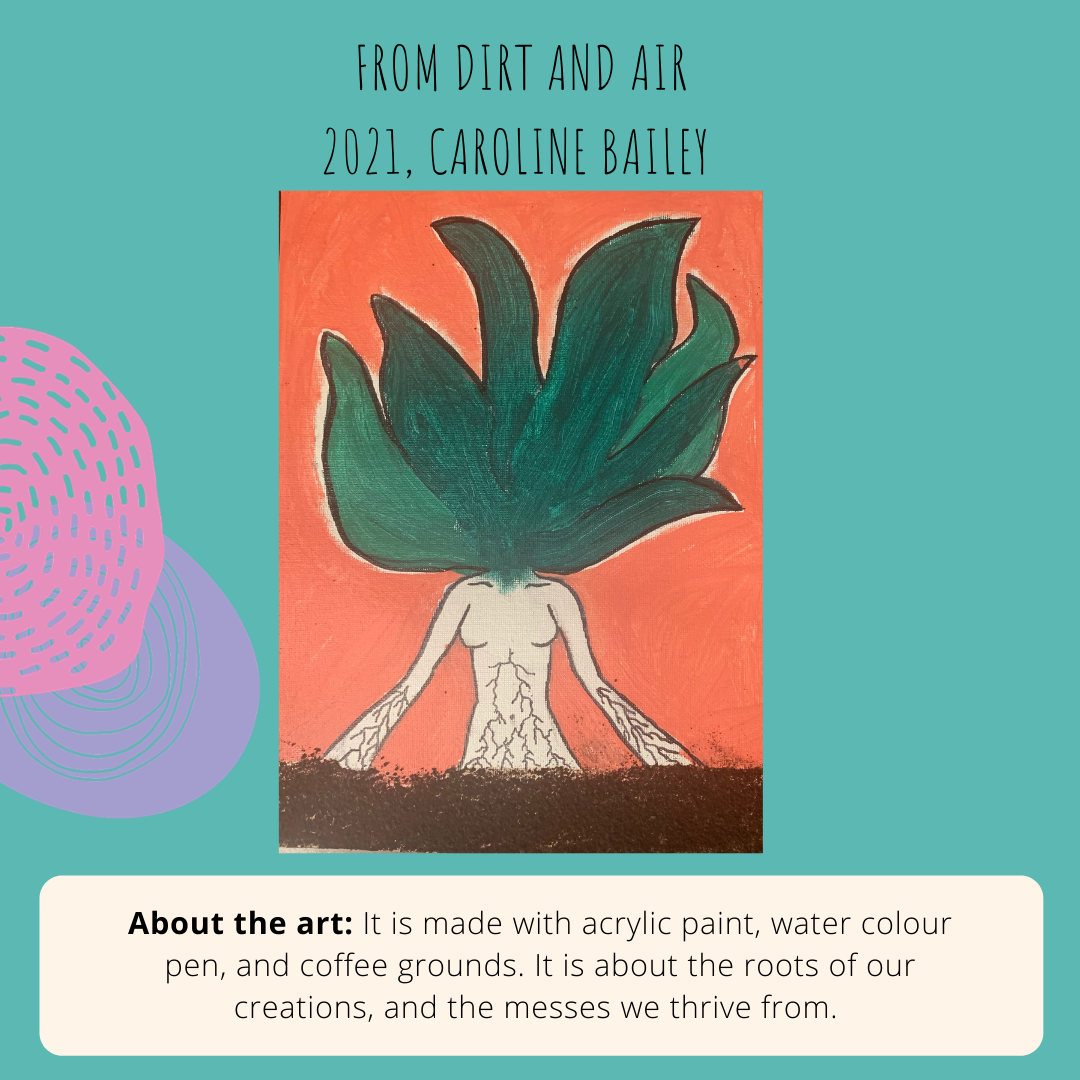
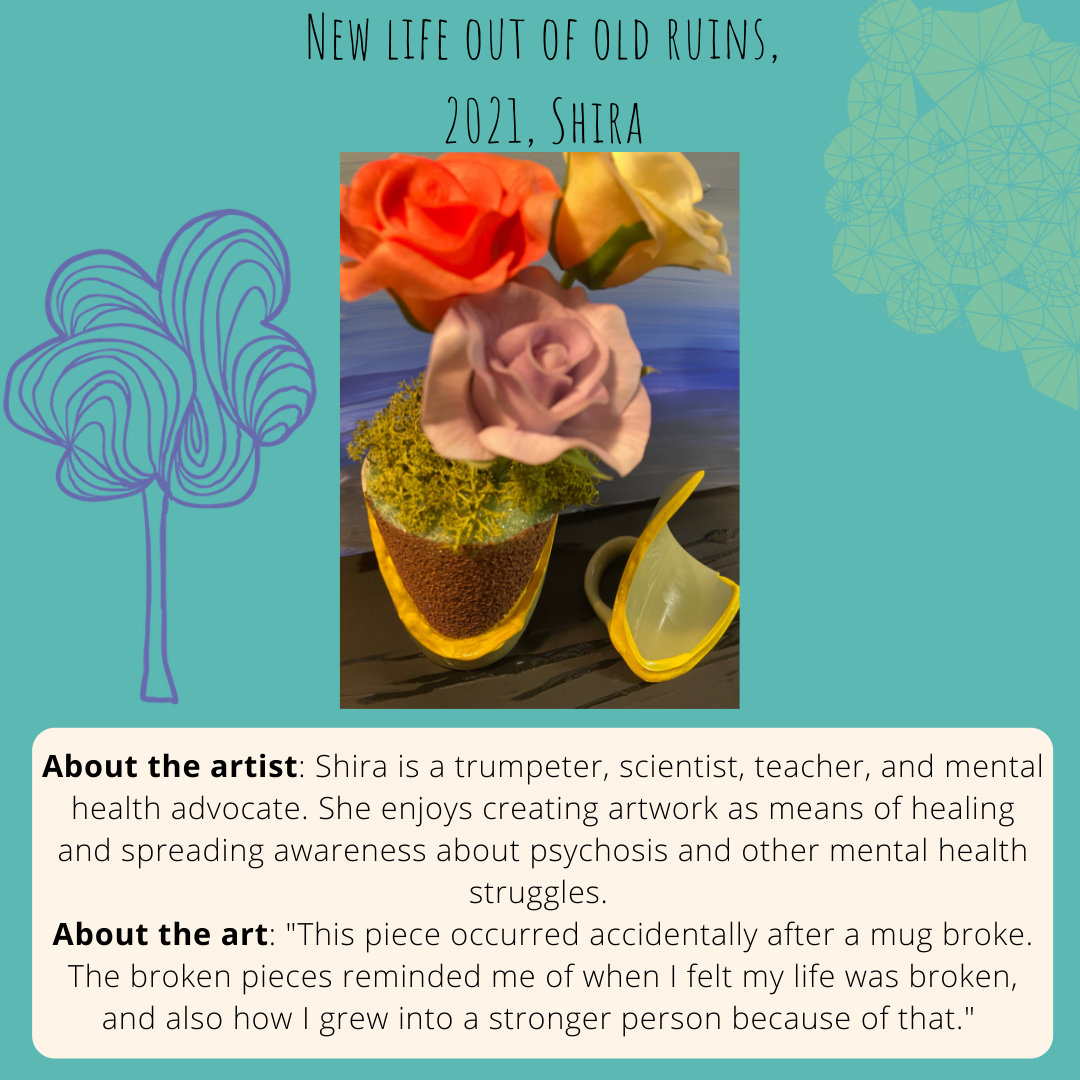
We are thrilled to share the artwork created with the first cohort of the BLIP youth group. Click on images to expand!
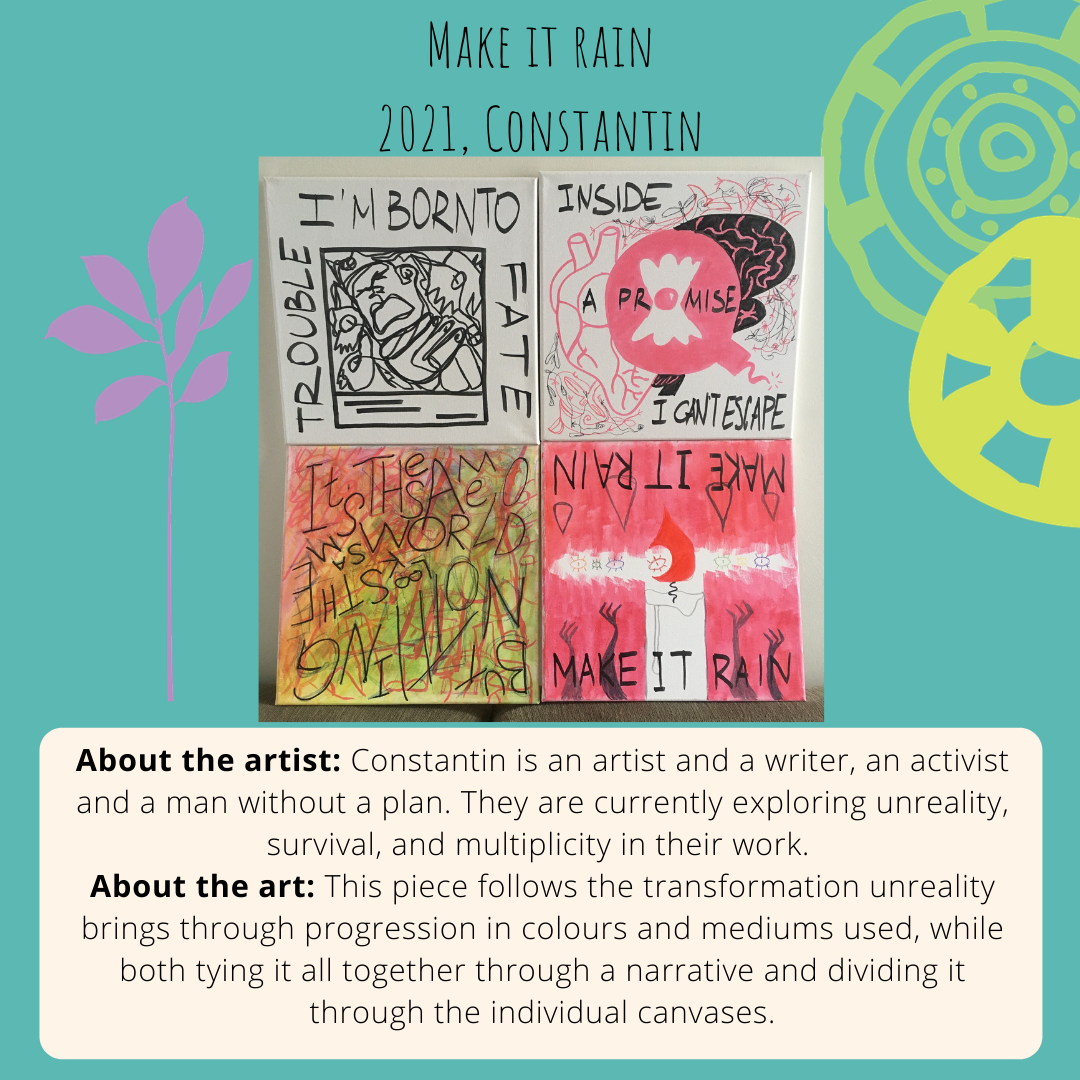
To learn more about future offerings of BLIP, or to learn more about groups offered by Foundry’s provincial virtual services, please visit foundrybc.ca/virtual/youth-groups.
To learn more about psychosis read the Questioning Reality section of our website or take the Questioning Reality Self-Check. If you would like to reach out to Foundry for support, reach out to Foundry’s provincial virtual services or visit a Foundry centre near you.