Tiera’s Story

It took two months of deliberating before Tiera took the brave step to access services for the first time at Foundry Abbotsford in 2019.
She was at an incredibly low point in her mental health journey when a friend reached out and encouraged her to visit Foundry.
She remembers how scared she felt sitting in the waiting room by herself, anxiously awaiting her first counselling session. Despite her nerves, she found solace in sharing her story and being seen and validated by her service provider who immediately recognized her love for art.
Her counsellor suggested exploring wellness programs where she could connect with other youth and partake in various group activities. Tiera declined numerous times, terrified by the idea of putting herself out there and meeting new people, but her service provider never stopped extending the invitation. When she eventually agreed, she felt reassured to discover there were other young people going through similar experiences of feeling stuck and alone.
Through wellness programs, she had the chance to participate in fun and unique activities such as goat yoga and discovered how meaningful it was to be included. “Not only was I able to get help for my mental health, but I was also able to get help in so many other ways” she says.
Living by herself during COVID-19 left her, and many other youth, feeling isolated and disconnected. Wellness groups were able to adapt services to offer virtual activities such as at-home baking sessions so young people could feel connected, even from a distance.
Through these groups, Tiera was able to connect with Foundry Peer Support workers in a casual, non-clinical setting. She finally felt a sense of community and belonging that was immensely supportive for her mental health.
“Having true friendships with people and making those connections meant the world to me and it really gave me a sense of community,” she says.
The healing aspect of nature
She was so inspired by the work happening at Foundry and the impact it was having on her life that she decided to pursue a volunteer position with Foundry Abbotsford. She became actively involved with Healthy by Nature, a program in partnership with BC Parks, designed to break down barriers and lead youth to connect with and learn about nature through various outdoor activities. She also used this as an opportunity to incorporate her creative passions for photography, painting and sketching.
Her beautiful artwork reflects her personal mental health journey and captures both the challenges she faced at the time as well as the elements that grounded her – such as the rustling of trees in the wind and the intricate details of the leaves.
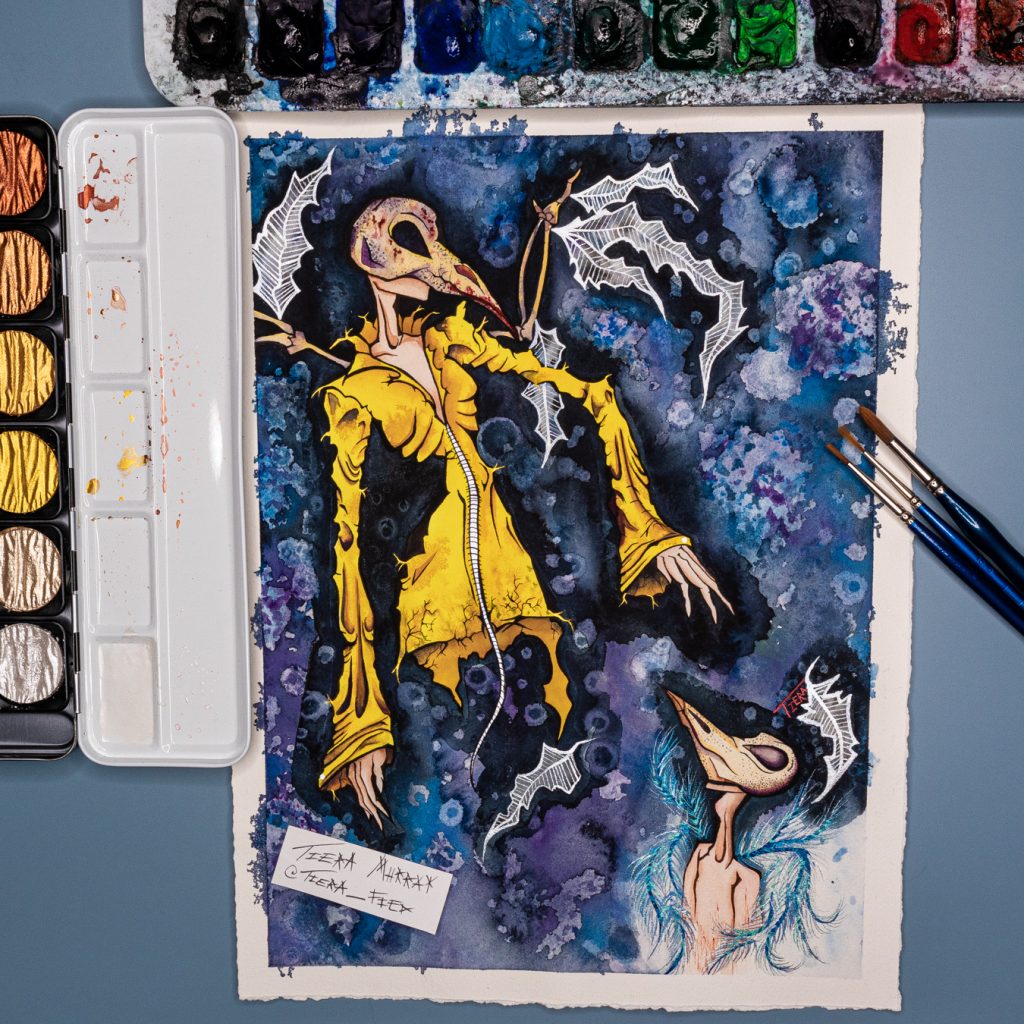
The healing aspect of nature and sense of community have been integral parts of Tiera’s mental health journey. It has connected her to something bigger. And she has noticed this sense of connectedness in youth as well – taking deep mindful breaths and admiring in awe all that the land has to offer.
Tiera’s exceptional contributions to Foundry Abbotsford did not go unnoticed and she seamlessly transitioned into an employee position where she is currently flourishing as a Group Facilitator.
She recalls how nerve racking it was walking through Foundry Abbotsford’s doors for the very first time.
“I came to Foundry so scared, and I was so intimidated because I didn’t know anyone,” she says. “We’re all scared sometimes to make that first step”
Today, she makes a conscious effort to greet every youth with warmth and create a safe inclusive space where young people are not only having fun, but also gaining skills, education and confidence. As well as being empowered to engage in community events and participate in activities on their own.
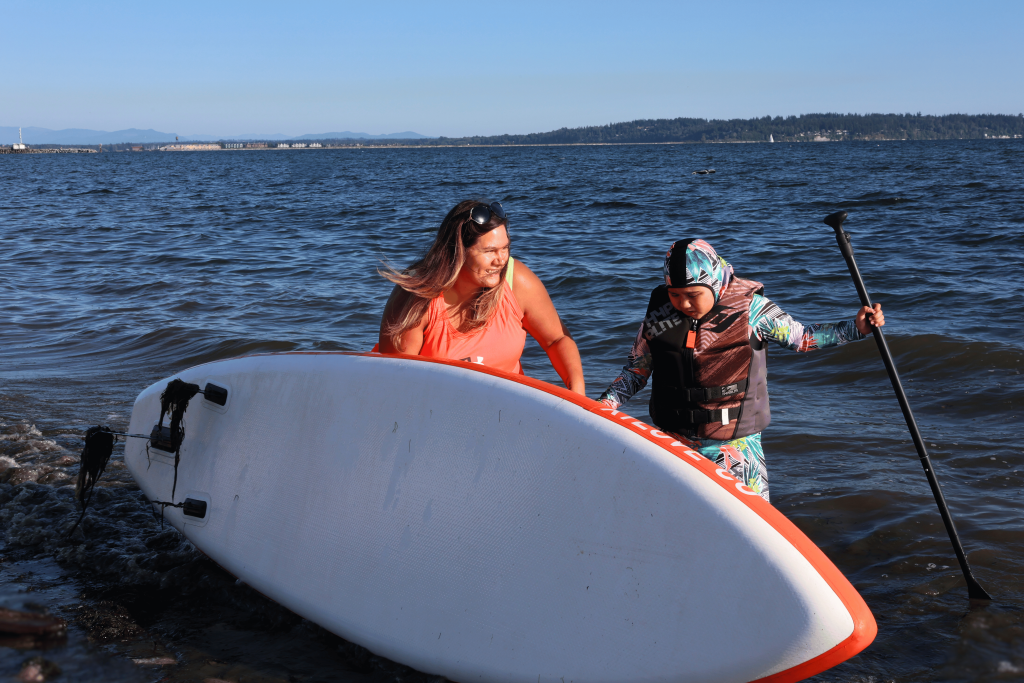
Culturally informed care is a priority for Tiera and the team at Foundry Abbotsford. Programs are youth-designed and reflect what young people want to see and learn more about.
Upon hearing that South Asian youth wanted to see more cultural representation, they created a session where young people learned how to make chai, facilitated by a South Asian Peer Support Worker.
“Youth need someone to be able to teach them and connect with them and I recognize that. I will humbly sit back and look all the avenues to bring that into the centre” says Tiera.
Tiera is also passionate about connecting with Indigenous youth in the community and has been actively building relationships with local Indigenous agencies. Recently, they were able to partner with an Elder to weave Indigenous ways of knowing and being into group programming through workshops and cultural teachings.
“Some youth have the same experience as me where we don’t really know [our culture] and maybe through residential schools we might never ever know that side, but we can still have teachings and we can still have that sense community…and it doesn’t just apply to our Indigenous youth, it includes everyone” she says.
The power of connection
Tiera shares she never thought she would be where she is today. Reflecting on her journey, she recognizes how impactful relationships and supportive connections were to her mental wellness. Driven by a desire to give back, she has dedicated herself to creating a welcoming community to support other youth in their own journey.
Earlier this year, Tiera was chosen as the well deserving recipient of the Brent Seal Mind vs. Mountain award. She generously donated the funds back to the centre to support youth groups with supplies for activities that may have not previously been accessible to them.
She sends a heartfelt message to other young people hesitating to seek supports for their mental health:
“Somehow find a way to go. If you need to bring a friend or comfort item to support you while you wait, just go. Whether it’s attending a group, counseling session or medical appointment, getting through the door is the hardest part, once you get here, you’re safe and in good hands.”

Foundry is here for you wherever you’re at. We offer free and confidential health and wellness service for BC youth aged 12-24 to connect with peers, join a group or workshop, or talk to a counsellor. Click here to find the centre closest to you or access services online through Foundry Virtual BC.
Foundry Virtual BC is here to help during the holidays
Sometimes, everything isn’t all merry and bright.
When we had the opportunity to speak with Foundry Virtual BC’s Youth Advisory Council about the upcoming holidays, most members noted the holidays brought mixed emotions; including sadness, loneliness, and anxiety.
For many young people, the holidays can be a difficult time. With shorter days, colder weather, and heightened pressures with social gatherings, it’s no surprise that there are increasing rates of depression, anxiety, substance use, and suicides during this time of year
“I personally struggle with my mental health a considerable amount more during the holidays,” a young person accessing Foundry Virtual BC’s services noted. “I think it’s due to the loneliness from not being around my friends at school, combined with often being forced to see extended family that I don’t feel comfortable around.” Additionally, the financial stressors that come with gift-giving amid inflation can sometimes feel like “it’s just too much.”
Another Youth Advisory Council member noted the increasing expectations that emerge around the holidays and how difficult it can be to say no.
“There are expectations to go to family, friend, or work gatherings,” they noted. “There are expectations to eat certain foods (could be stressful for someone with an eating disorder, or for someone with mental health issues or sensory processing issues related to neurodivergence), and expectations to be doing lots of fun/extroverted stuff, which can be hard to say no to when you are struggling.”
Foundry Virtual BC is here to help

We know firsthand from the youth and caregivers accessing Foundry Virtual BC supports, that alongside the increase in mental health challenges throughout the holidays, trips to the emergency department become more frequent and often end up being sought out in moments of distress.
Through Foundry Virtual BC, our hope is that young people who do not have access to resources or a Foundry centre in their community feel that they have someone to talk to and know that they aren’t alone.
Here’s a short story of how Foundry Virtual BC supported a young person who accessed the emergency department during the holiday season.
During their winter break, a 16-year-old youth had been struggling to leave their home. With no school or extracurricular activities to keep them busy, they were feeling a big sense of loneliness, sadness, and anxiety. This youth was struggling to express how they were feeling, and their family was becoming increasingly frustrated with a lack of support available and not knowing where to go to get help. This resulted in a visit to the Emergency Department.
Upon discharge, the youth and their family were educated about Foundry’s virtual services by talking to Emergency Department staff who had recently learned about Foundry. The youth downloaded the Foundry BC App in the Emergency Department and booked their first appointment for the next day with a youth peer support worker who had similar lived experiences.
The youth continued to connect with peer support and found themselves feeling validated and understood. They also engaged in some short-term cognitive behavioral therapy (CBT) sessions with a counsellor on the Foundry Virtual BC team to focus on goals of reducing anxiety and improving their mood and are now in the process of connecting with a Nurse Practitioner to explore medication options.
The young person’s parents were able to connect with a family peer support worker to better understand how to support their child and are also interested in attending the Emotion Focused Family Therapy (EFFT) caregiver workshops to learn new skills to help support their child and understand more about mental health.
One virtual appointment away

Young people (or their family members) may experience increased stress, anxiety, depression, substance use challenges, and eating disorders this holiday season. Foundry Virtual BC is here to help support you during this time.
Whether you are feeling lonely, sad, lost, anxious, or overwhelmed, our team of services providers are just a virtual appointment away. We are open 7 days a week from 1:00pm – 9:00pm. We are closed December 25th, December 26th and January 1st. If you require immediate crisis assistance, please call the BC Crisis Line: 1-800-784-2433 or Kids Help Phone: 1-800-668-6868.
To learn more about Foundry Virtual BC’s services, please visit www.foundrybc.ca/virtual
Foundry Sea to Sky now offering interim services
Launch of first-ever Canadian youth mental health platform will transform research and treatments
A pioneering youth mental health project will enhance Canada’s overall understanding of youth mental health needs and advance new assessment and treatment approaches. Each year, one of out every four youth in Canada needs mental health services, making an initiative such as this urgent and critical for the well-being of our young people. The “Canadian Youth Mental Health Insight (CYMHI) Platform” powered by RBC Future Launch, will use open data, machine learning and other methods to improve communication between youth and families, researchers, clinicians and other service providers with diverse mental health experiences and specializations.
A specialized research team has been awarded a $5.13-million grant to create this platform to optimize mental health with and for youth across Canada. Generous funding has been provided from RBC Future Launch, Power Corporation of Canada, and the Canada Brain Research Fund (CBRF), an innovative arrangement between the Government of Canada, through Health Canada, and Brain Canada.
Led by Dr. Sean Hill, Director of the Krembil Centre of Neuroinformatics, and Senior Scientist at the Centre for Addiction and Mental Health (CAMH), the team brings together diverse organizations across the country including academic institutions, community-based mental health services, hospitals, and youth and family advisories from Foundry, Youth Wellness Hubs Ontario, and other integrated youth services.
The Insight platform will provide an interactive web portal for youth, family members, clinicians, service providers, researchers, and policy makers to access shared data, analytics, and AI tools for optimizing mental health care. The portal will enable users to find data and connect insights from community and school prevention programs, youth mental health services, and clinical research studies. The portal will also provide access to AI-based services to help users navigate mental health services, personalized tools for monitoring mental health, identifying risks, and recommending services, and an interactive atlas of youth mental health service demand and availability to guide service providers and policymakers.
“Through this project, we are providing a state-of-the-art informatics platform that serves as a foundation to improve mental health for, and importantly, with youth across the country,” notes Hill. “It will facilitate high impact research and the development of youth mental health approaches that would otherwise not be possible.”
“The CYMHI is a fantastic development to empower youth and youth-involved initiatives to take ownership in paving the way for future mental health service implementation,” says Suchayte Bali, Youth Engagement Coordinator at Foundry. “At a grassroots level, this can allow for many youth-led not-for-profit organizations to garner an understanding for which supports are needed in their communities, now backed by machine learning data from across Canada.”
“Right now, 9 out of 10 provinces are funding services with research components, British Columbia can’t learn from New Brunswick, and Ontario is missing evidence from Saskatchewan and so on,” says CYMHI leadership team member Steve Mathias, Executive Director at Providence Health Care and leader of Foundry, a British Columbia network of centres that offer young people health and wellness resources, services and supports both in person and virtually. “It is about bringing everyone together to share and exchange what we are living, and learning.”
Mental illness disproportionately affects young people between the ages of 15 and 29 worldwide. It accounts for approximately half of the overall burden of disease in this age group, making it the leading cause of disability in Canada.
“More than ever, brain research is critical in helping us, as a community, recover from the COVID-19 pandemic and mitigate its effects on the brain and our mental health,” says Dr. Viviane Poupon, Brain Canada President, and CEO. “We must invest in projects like these that will lead to concrete impacts on brain health for youth in Canada.”
“The stress, anxiety, depression, and loneliness caused by the COVID-19 pandemic have disproportionally impacted the mental health of young people in Canada. With so many children and youth still struggling, it is essential that we accelerate our efforts to ensure that young people have access to appropriate supports when and where they need them,” says The Honourable Carolyn Bennett, Minister of Mental Health and Addictions and Associate Minister of Health. “This ground-breaking mental health platform will continue to improve youth mental health services by listening to youth in order to base our response on a much better understanding of youth priorities, needs and treatment approaches.”
“It’s important to us that youth across Canada have the best opportunities to thrive and reach their fullest potential,” says Mark Beckles, Vice-President, Social Impact and Innovation, RBC. “Through our partnership with Brain Canada, we’re focused on increasing and accelerating access to services for youth who are facing mental health concerns, while facilitating digital solutions for practitioners and researchers.”
“At Power Corporation we recognize how critical it is to strengthen access to mental health services and supports for young Canadians and their families, wherever they live. We are proud to be able to support the Canadian Youth Mental Health Insight (CYMHI) Platform. This advanced digital platform and pan-Canadian partnership between researchers and practitioners promises to fill gaps in support and ultimately enhance the quality of youth mental health care in every region of the country,” says Paul Genest, Senior Vice President, Power Corporation of Canada.
This project was awarded funding through the 2021 open call for applications to the Brain Canada Youth Mental Health Platform, powered by RBC Future Launch, with generous support from Power Corporation of Canada.
Funding for the Brain Canada Youth Mental Health Platform has been made possible by the Canada Brain Research Fund (CBRF), an innovative arrangement between the Government of Canada (through Health Canada) and Brain Canada Foundation.
To learn more about this exciting project, visit Brain Canada’s website.
Foundry PhD research trainee receives prestigious Clyde Hertzman Memorial Fellowship
On August 31, 2022, Katherine (Katie) Hastings, a UBC doctoral student was named the successful recipient of the 2nd annual ‘Society to Cell’ Clyde Hertzman Memorial Fellowship for her research project, “How has the mental health service needs of youth in BC changed since the pandemic: a retrospective analysis using data from a province-wide integrated youth service network“.
The ‘Society to Cell’ Clyde Hertzman Memorial Fellowship financially supports UBC trainees who are conducting research projects that will enrich our understanding of the impact of social and environmental factors on health and well-being across the life course.
For Dr. Skye Barbic, Head Scientist at Foundry, this scholarship honours the legacy of Dr. Hertzman – who passed away suddenly in February 2013 – as a world-leading researcher in the social determinants of health, a champion for social justice, and a tireless advocate for youth.
“We are so proud of Katie’s work to date,” says Dr. Barbic, “and look forward to partnering with her and Dr. Anne Gadermann from the UBC School of Public and Population Health to advance this impactful research and support Katie’s trajectory as a future health service leader, educator, and researcher.
Learn more about her project below:
How has the mental health service needs of youth in BC changed since the pandemic: a retrospective analysis using data from a province-wide integrated youth service network
Canada and many parts of the world are investing in an emerging model of care called Integrated Youth Services (IYS), combining a blend of traditional (psychiatric care, counseling) and non-traditional services (peer support, primary care, and social services) delivered in a singular, accessible and youth-friendly location. This comes at a critical time in which youth are facing unprecedented levels of social isolation and missing important developmental milestones with school closures, quarantine orders, and increased family and individual stress due to the pandemic.
The overall aim of this study is to understand the impact of integrated youth services (IYS) on access and service utilization patterns among diverse youth in BC, by describing characteristics and predictors of service utilization among youth accessing IYS; comparing temporal trends of service use and mental health outcomes of youth accessing services by IYS sites over time (2018-2022); and comparing overall service utilization patterns (i.e., any mental health-related services accessed in BC) of youth before and after an initial visit at an IYS.
With widening socioeconomic and health inequities, understanding the impact of Foundry, an IYS established in 2015, and the needs of diverse youth in BC will help inform rapid policy and public health action to address these disparities.
“Being awarded this fellowship means a lot to me,” says Katie. “Dr. Clyde Hertzman has left a huge legacy in the field of early childhood development and I hope to honor his vision to explore ‘differences that make a difference’ through this work.”
“We have a unique opportunity to examine the mental health landscape and service needs of youth through the rich data sources available at Foundry. Findings from this study can be used to identify potential gaps in access and services needed to address the increasing mental health burden among youth brought on by the pandemic.”
Congratulations to Katie on this award!
Clyde Hertzman Memorial Fellowship Award, UBC researcher, Dr. Skye Barbic, Skye Barbic, Foundry BC, Foundry, the Foundry, integrated youth services, foundry counselling, youth mental health, translated mental health services, kids mental health, free counselling, youth support, teenager mental health support, youth programs, mental health and addictions
Two Foundry teams funded through PHC’s annual Practice-based Research Challenge
On Aug 23, two Foundry Vancouver-Granville teams were among the 15 successful teams receiving funding through the annual PHC Practice-based Research Challenge, for their research project: Experiences of Indigenous youth accessing mental health care through primary care and psychiatry at two inner-city integrative community health centres.
The Research Challenge is a competition open to point-of-care PHC staff and offers research teams the opportunity to work with a mentor to develop a research proposal around a research question, where they learn basic research skills and compete with other teams for funding to conduct a small-scale research project.
Presentations were judged by a panel comprised of scientific and Patient and Family Partner reviewers.
Winning teams receive up to $5,000 each in research award funding to conduct their research over an 18-month period.
Learn more about their project below:
Experiences of Indigenous youth accessing mental health care through primary care and psychiatry at two inner-city integrative community health centres.
Team members:
- Janae Dunlop RN
- Lyn Heinemann OT
- Emily Leake NP
- Sarah Cochrane NP
- Courteney Durand PFP
Young people aged 15–24 are more likely to experience mental health and/or substance use disorders than any other age group. As a result of the negative impacts of colonization, cultural oppression and historical trauma, Indigenous youth experience a disproportionate burden of mental health and substance use concerns with even more barriers to accessing care than non-Indigenous youth. Primary care and mental health services in urban settings have generally not been adapted to serve the needs of Indigenous young people.
The aim of this project is to gain an understanding of the experiences of Indigenous youth ages 16-24 years who have accessed mental health care through primary care and psychiatry at two urban health centres. Findings may help service providers optimize the care outcomes and experiences of urban Indigenous youth and directions for future research.
What is the experience of youth transitioning from Foundry youth services to adult care?
Team members:
- Farzana Rayani – Nurse Practitioner
- Chelsea Stratton – Rehab Assistant
- Ingrid Mayer – Patient Family Partner
- Danielle O’Callaghan – Patient Partner
Our research project will look at the experience of youth transitioning from Foundry integrative youth services to adult care, or independence. Foundry is a community-based youth (age 16-25 years) mental health and substance use clinic. Foundry Services are comprehensive and offer mental health care, substance use services, primary care, social services, and youth and family peer supports.
Due to this “one stop shop” approach to care, our clinic is heavily involved in many aspects of a client’s life until they turn 25. There is currently no transition pathway or plan in place that Foundry clinicians can use to guide clients through the ageing out process.
To explore this transition period, we will complete a qualitative research study using interviews and focus groups with former Foundry clients to identify the ways their health, and overall wellbeing has changed since ageing out of Foundry care. Our goal is to use the information gathered and to develop a pathway Foundry can use to better support and prepare our clients as they transition out of our care.
Foundry Vancouver-Granville is part of the Foundry network, a growing provincial and national network that includes over 200 partnerships. It also serves as one of 12 Foundry centres across BC that provides free and confidential health and wellness services for young people ages 12-24.
“The Foundry Network is a Learning Health System,” says Dr. Skye Barbic, Head Scientist, Foundry. “The Research Challenge is an opportunity to create, acquire, and transfer new knowledge from one centre and share insights with partner organizations in Vancouver and across the entire Foundry network.
“The success of these teams shows incredible commitment from service providers at Foundry Vancouver Granville. We are grateful to their commitment to generate and share evidence to improve the outcomes and experience of youth and families.”
Congratulations to Janae Dunlop, Lyn Heinemann, Emily Leake, Sarah Cochrane, Courteney Durand, Farzana Rayani, Chelsea Stratton, Ingrid Mayer, Danielle O’Callaghan on this award!
PHC research challenge, PHC, Providence Health Care, Foundry Vancouver-Granville, UBC researcher, Dr. Skye Barbic, Skye Barbic, Foundry BC, Foundry, the Foundry, integrated youth services, foundry counselling, youth mental health, translated mental health services, kids mental health, free counselling, youth support, teenager mental health support, youth programs, mental health and addictions
An Interview with Dr. Sarah Munro
Written by: Jeanna Pillainayagam, member of Foundry’s Provincial Youth Advisory Committee
In early May, I had the opportunity to interview two researchers who had met with the Youth Research Advisory Panel (YRAP) to gain feedback on their research grant proposals. I wanted to see what the experience of working with the YRAP was like for them, as well as gain some insight into their perspectives on the importance of collaborating with youth in research. Below are some snippets of my conversation with Dr. Sarah Munro.
*Please note that I have lightly edited Dr. Sarah Munro’s responses for the sake of clarity.
Jeanna: How did you hear about the YRAP?
Dr. Munro: I heard about it when it was being planned. I was invited to be a part of the academic team putting in the grant application that funded the YRAP. It was through a collaboration I was doing with the [Principal Investigator] and it was around youth and healthcare and it seemed like a great synergy. So I first learned about it when it was in its development stage.
Jeanna: What made you want to approach the YRAP for feedback regarding your grant proposal?
Dr. Munro: Well, I think it’s becoming an expectation of research that involves any populations that access healthcare, that the research needs to be done in some kind of partnership. Those partnerships need to be genuine, they need to be built on trust and collaboration, and starting those partnerships from scratch takes a lot of time. And in my experience, it really takes a year between first making contact and having time to get to know each other, build[ing] that trust before really having a genuine relationship where people’s ideas are incorporated into the research and they actually get to co-produce the research. So the opportunity to connect then with a group that had so much capacity and built-in expertise, that felt to me like a lifeline during a very busy time. We’re all so physically isolated with COVID that the opportunity to do outreach, especially with youth, has just changed completely. So it was great timing for this particular project that the YRAP was there and eager to collaborate and ha[d] the skills in place so that we were able to kind of jump into that relationship process with a lot of those supports already in place.
Jeanna: What were some of your key learnings from your experience working with the YRAP?
Dr. Munro: That I want to find more ways to keep capacity for groups like this going. You were [telling me earlier] that it had an impact on you, it was meaningful, especially during COVID. I had the same experience with another group of parents that I collaborate with. They’re an advisory group like the [YRAP], and one of the things that they talked about was how much they took away from the group experience. I think that [when] doing any kind of partner research or patient engagement, that there needs to be that kind of mutual reciprocity really built into it so that the people who are giving their time in actually informing the research process actually feel like they’re getting something out of it too. What I really take away from my experience is that this is a model of engagement that we need to replicate. It shouldn’t just be in COVID times or just around research with youth. I think it should be something where we look at what worked successfully for the [YRAP] and try and replicate that across different areas and across research.
Jeanna: Do you think there’s a growing desire among researchers in your field to have more input from youth in their research?
Dr. Munro: I think there’s maybe a desire but a lack of understanding of how to do it. In health research so much of the training is focused on, well unless it’s interdisciplinary, it’s usually that you don’t get a lot of training in the skills required to do this kind of work. So a lot of people feel like it’s intimidating to get into. They don’t really know how to do it, they don’t have maybe the language with which to speak to youth. Or maybe they even do research in an area … [such as] bench science or clinical research [where] they don’t see how they can really meaningfully work with youth who would be affected so much further down the research pipeline. So while there may be an interest and even a kind of push from funders to do it, I think that there’s still a sense of ‘how do I get started?’ from researchers. Whereas the idea of doing work in partnership is not new to research more broadly. It’s something that anthropologists and social scientists have been doing for a really long time—people who would be more familiar with words like, “community-based research” or “participatory action research.” None of that is new. But it is nice to see that beautiful, rich tradition of research is making its way and it’s bleeding into healthcare research these days.

Image description: A young person wearing standing next to an older women of colour wearing a white top who is writing in a notebook
Jeanna: What would you say are some of the challenges of incorporating youth feedback into research?
Dr. Munro: I think that research conventions make it really difficult to retain youth voices. So what I had as a product of my time with the YRAP was a research proposal. And the process of translation from the kind of conversation we had with the [YRAP] to where it ended up in the proposal was very much filtering it through academic jargon, which truly loses how vibrant and how exciting the feedback was. I think that what we could be thinking about is what are some unique and out-of-the-box ways to represent patient voices? One thing I really like is the letter of support that was included [with] my grant, that was written by members of the [YRAP] in their own voices. And a lot of the content we had in the grant like how we were going to do our engagement for the project, the type of language and terminology that we were choosing, there was that space in the support letter to represent that in youth’s own voices. And I think that’s really important. We need to have more opportunities for that, whether it’s personal statements … or a way to include direct quotes from youth in the grant. That would be, I think, a really nice way to make sure that we’re not repurposing or even co-opting youth voices as researchers.
Jeanna: Do you see this type of panel being adopted in other fields of research or even other parts of the world? Do you see this kind of model being replicated?
Dr. Munro: Well, I’ve already stolen ideas from it! I was really inspired by some of the infrastructure and I used it to help my parent advisory group. So this is a group of fifteen people with children of ages 0-5, and they meet with me on a monthly basis to provide feedback on the research that I’m doing around pregnancy and reproduction. We don’t have any youth members in this group but … the way that the [YRAP] provided feedback on my grant proposal, I was able to take some of the inspiration and some of the questions in the conversation we had and to facilitate some of the meetings with my parent advisory group. So it took on a similar model, which led to some great discussions and touched on things we never would have explored before had I not changed how we facilitated those group meetings. I think for other [research] areas, it doesn’t have to be restricted to youth. I think the model of the panel would be great for a lot of other populations and clinical topic areas … because it has the potential for so much more sustainability, and also … there’s this kind of reciprocity piece. Having that opportunity to have a meaningful say in the research process, to connect with peers and build community. … [W]hat I find when people participate in the research process, who aren’t researchers themselves, there’s a sense of, not necessarily validation, but [they] feel seen and respected and heard …

Image description: Two young people sitting on the floor with a laptop in front of them – the young person on the left is writing in a notebook; the young person on the right is reading her notes
Jeanna: Do you think that in research, the knowledge researchers acquire through education and working in the field can sometimes conflict with first-hand and lived experience?
Dr. Munro: Yeah, but conflict isn’t necessarily a bad thing. And I mean as a qualitative researcher I believe that knowledge is subjective, and is constructed, and is contextual. There is not necessarily truth being covered through our studies, but potentially many knowledges that may conflict with each other. And it’s important to take those moments of conflict and think of them as opportunities. Where do we have common ground? Why do we have different perspectives? If there’s, say, knowledge that’s being generated through traditional academic research that conflicts with patient and youth experiences, then we need to interrogate [whether] that knowledge [was] created in a way that … is not going to reflect youth experiences because it wasn’t developed by and for youth.
Jeanna: In your opinion, what are the benefits of working with a group like the YRAP on grant proposals?
Dr. Munro: I mean the simplest logical benefit is that it makes the research better. … [I]f as researchers we create knowledge that doesn’t reflect youth experiences or isn’t grounded in research questions that are important to youth, then what’s the point of it? It’s not going to actually have the change or the impact that we’re seeking, which is to improve healthcare access and experiences for youth. At the end of the day, I think that’s what drives my research, and having a YRAP and models like that ensures that we make the research process as relevant as possible to youth from day one, from the moment of coming up with a research question.
About Jeanna Pillainayagam

Image description: A person of colour smiling at the camera against a black background.
Jeanna Pillainayagam is currently a member of the Foundry Provincial Youth Advisory Committee, and was a member of the Youth Research Advisory Panel (YRAP). She also has volunteer experience with mental health organizations including CMHA-BC and Jack.org, and has previously worked on mental health projects with groups such as Anxiety Canada, the University of Northern British Columbia, and the BC School Counsellors Association. She is passionate about promoting mental health education and destigmatizing mental illness.
Jeanna believes the YRAP was an excellent opportunity for young people to advocate for the needs of youth in terms of creating accessible, adequate, and appropriate health/wellness services. She hopes to see more programs like the YRAP in the future.
Keywords: youth research, accessible research, Foundry BC, Foundry, Feedback, Research, Youth, Youth Research, Youth Participants, Practicality, Nuance, Privacy, Research Study, community-based research, participatory action research, healthcare access